
confined space training in WA that keeps crews out of the obituary column
Most people who die in a confined space were never meant to be inside it, and a large share of them were trying to rescue someone else.
what counts as a confined space on a WA site
A confined space is not simply a small space. Under the work health and safety framework it is an enclosed or partially enclosed structure that is not designed for continuous human occupancy, that is at or near atmospheric pressure, and that carries a risk of an unsafe atmosphere, engulfment or restricted entry and exit. Tanks, silos, pits, sewers, pipework, ship holds, dust collectors and pump wells all sit inside that definition.
Furthermore, the label matters because it triggers legal duties. Once a space is classified as confined, entry requires a permit, atmospheric testing, a standby person and a rescue plan. KI Training & Assessing delivers confined space training from our Welshpool campus and at Naval Base in Western Australia. To give evidence, KITA holds 258+ authentic Google reviews at 98% satisfaction and has trained over 10,243 students across the state.
However, plenty of workers walk into these spaces without recognising them. A shallow trench with a heavier than air gas pooling at the bottom kills just as effectively as a sealed tank. The first job of the course is teaching crews to identify the space before the hazard identifies them.
Key takeaways for confined space training in WA:
- RIIWHS202E Enter and Work in Confined Spaces is the nationally recognised unit that WA sites name in their entry procedures.
- Industry practice sets a two year refresher cycle, and many principal contractors enforce it as a condition of site access.
- Gas Test Atmospheres (MSMWHS217) is a separate unit, and the person testing the air must hold it in their own right.
- KI Training & Assessing runs courses at Welshpool and Naval Base, backed by 258+ Google reviews at 98% satisfaction and over 10,243 students trained.
- A written entry permit, a standby person and a workable rescue plan are required before anyone goes through the hatch, without exception.
RIIWHS202E on the national training register
The unit covers planning and preparing for entry, identifying the hazards, applying the permit system, using the correct personal protective equipment, entering and working safely, and exiting and cleaning up afterwards. It is written for resources and infrastructure work, which is why it is the version most Western Australian sites specify.
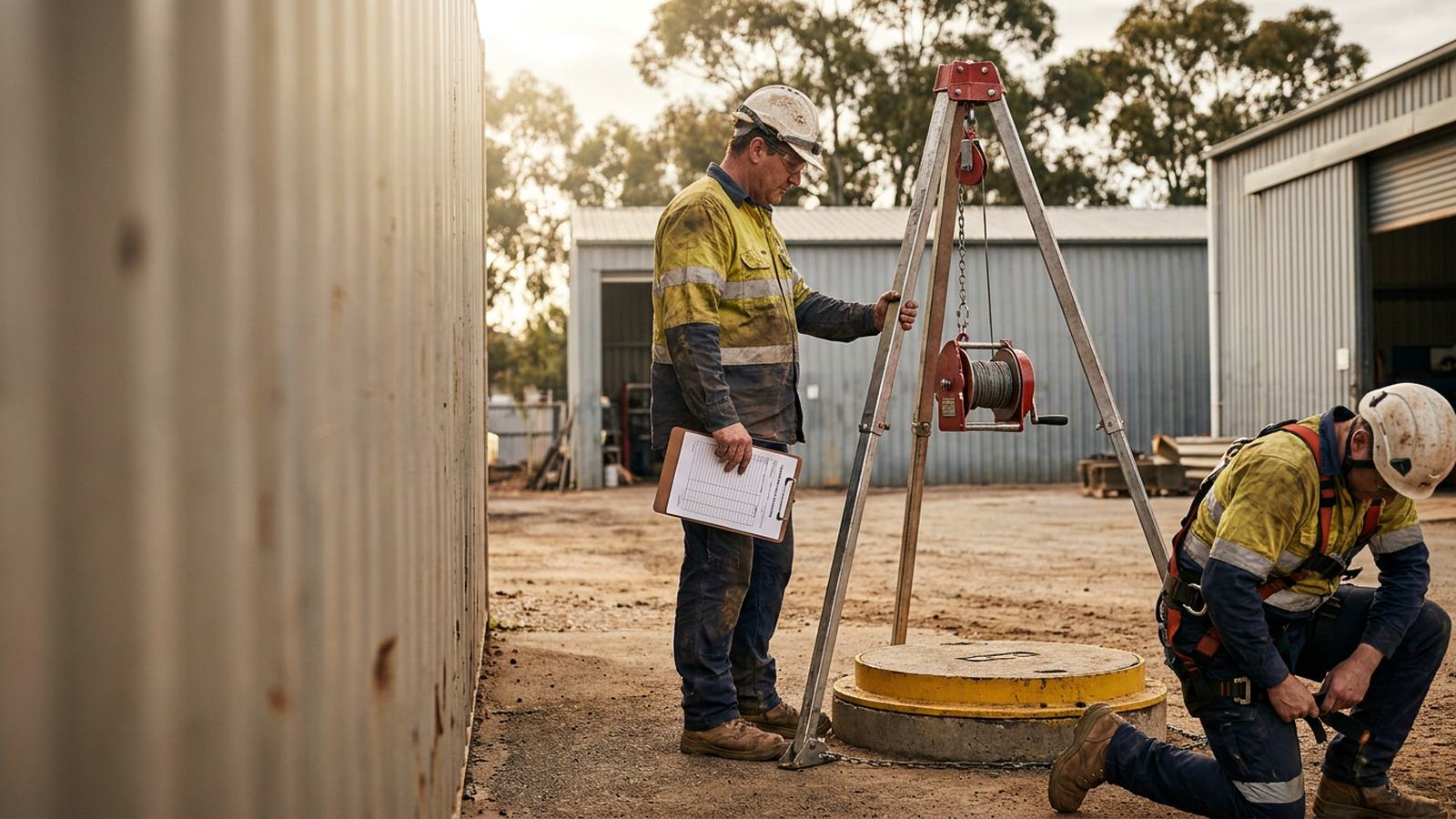
Moreover, the practical component is the part that changes behaviour. Students fit a full body harness, connect to a retrieval line, work with a tripod and winch, and communicate with a standby person while inside a simulated space. Reading about the procedure and performing it while wearing gloves in a restricted opening are very different experiences.
In addition, the course covers isolation. Mechanical and electrical energy sources feeding a space must be locked out and tagged before entry, and a stirrer or auger that starts while someone is inside is a fatality. Students practise the isolation checklist rather than being told it exists.
why gas test atmospheres training WA employers ask for is separate
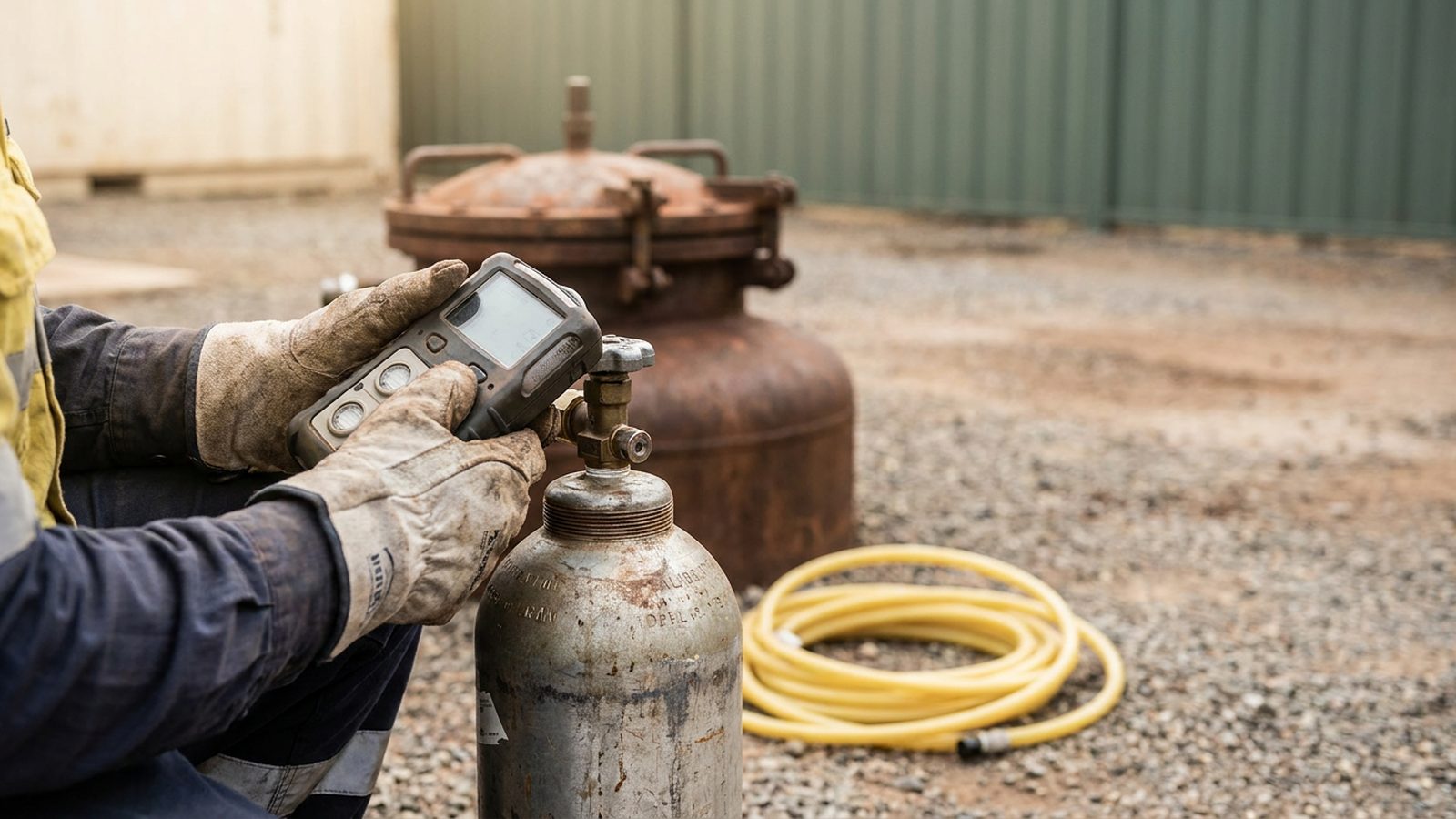
MSMWHS217 Gas Test Atmospheres is its own unit of competency, and it exists because interpreting a gas detector correctly is a technical skill. The person doing the testing needs to know the alarm set points, the order in which readings settle, and how to bump test and calibrate the instrument.
Furthermore, the four readings that matter are oxygen, flammable gas as a percentage of the lower explosive limit, carbon monoxide and hydrogen sulphide. Each has a different behaviour. Oxygen deficiency gives no warning at all, hydrogen sulphide deadens the sense of smell at exactly the concentration where it becomes dangerous, and heavier gases sit low where a probe held at the hatch will never find them.
However, the practical error we see most often is testing only at the opening. A proper test samples the space at top, middle and bottom levels, allows time for the sample to draw through the tubing, and repeats through the shift because conditions change. That discipline is what the unit teaches, and it is why we recommend taking it together with the entry unit.
Safe Work Australia confined spaces code of practice
An entry permit is a written authority that names the space, lists the hazards, records the atmospheric readings, sets the isolation state, names the entrants and the standby person, and sets a time limit. It is signed before entry and closed out afterwards. If it is not written down, it did not happen.
In addition, the standby person is not a spare pair of hands. Their sole job is to remain outside, maintain continuous communication with the entrants, monitor conditions, control who enters, and initiate the emergency response. They do not leave the opening, and they do not enter to attempt a rescue.
Moreover, that last rule is the hardest to hold. Rescuer fatalities are common in confined space incidents precisely because instinct overrides procedure. Training the standby person to call the rescue team and operate the retrieval winch from outside is the single most valuable thing the course does.
“A confined space is a space with limited entry and egress and not suitable for human inhabitants.” – confined space hazards overview
practical skills and permit discipline decay without practice
The widely applied interval is how often a confined space refresher Perth sites accept is needed, and the answer is two years. Nothing on the statement of attainment expires, but industry guidance and principal contractor policies converge on a two year cycle because the practical skills and the permit discipline decay without use.
Furthermore, some sites tighten that. Oil and gas facilities, water utilities and heavy process plants often require an annual refresher, or a site specific verification of competency before a worker is added to the entry register. Check the client requirement before you assume your card is enough.
However, a refresher is not just a formality. Standards, detector technology and rescue equipment change, and a worker who trained on older gear may not recognise the instrument now hanging on the tripod. Payment for training can be made by card, bank transfer, cheque, or employer purchase order, and we can quote a whole crew at once.
working at heights and harness training
A rescue plan that says “call 000” is not a plan. Emergency services take time to arrive, and in an oxygen deficient atmosphere the casualty has minutes. The plan has to describe how this person is removed from this space using equipment already on site.
Moreover, the preferred approach is non entry rescue. The entrant is attached to a retrieval line through a tripod or davit arm before they go in, so a winch can bring them out without anyone else going through the hatch. That is why harness fitting and winch operation are assessed rather than demonstrated.
In addition, the plan must be tested. Running a practice retrieval before the job starts tells you whether the tripod fits over the opening, whether the line reaches the bottom, and whether the casualty can actually be drawn through the hatch in a harness. Discovering the opening is too narrow during a real emergency is the worst possible time.
Customer story (anonymous name to keep the client private): A water infrastructure contractor working south of Perth booked eight of their maintenance crew through us after a near miss at a pump well near Naval Base. A worker had entered to clear a blockage with the atmosphere tested only at the hatch, and a colleague noticed him becoming unsteady about two minutes in. He was pulled out on the retrieval line and recovered fully. The supervisor asked us to train the whole crew together, with Gas Test Atmospheres added so every member could test rather than relying on one qualified person who was not always on shift. We ran the group across two days, including practical retrieval drills using their own tripod and detector. The contractor now runs a two yearly refresher for the team and tests every space at three depths as standard.
high risk work licence courses in Welshpool
Water and wastewater crews, tank and vessel maintenance teams, shipyard workers, grain and bulk handling staff, mining maintenance fitters, electricians working in pits and switch rooms, and cleaning contractors servicing industrial plant all fall inside the requirement.
Furthermore, supervisors and permit issuers need it even if they never enter a space themselves. A supervisor signing an entry permit is taking responsibility for the assessment on that document, and doing so without the underpinning knowledge is an exposure for both the individual and the business.
In addition, standby personnel need the training. Some employers try to fill that role with an untrained observer, which defeats the purpose. The standby person is the emergency response, and they need to know the rescue plan and the equipment as well as the entrant does.
Unique Student Identifier registration portal
Bring photo identification and your Unique Student Identifier, which is free from the national registry and takes a few minutes to create online if you do not already hold one. There are no formal prerequisites, though reasonable physical mobility is needed for the practical component.
Moreover, wear work clothing and boots you can move in, since the assessment involves harness work and entry through a restricted opening. Tell the trainer at the start if you have any concern about enclosed spaces, and we will manage the practical accordingly rather than putting you on the spot in front of the group.
In addition, many workers combine confined space with white card construction induction training or working at heights, since the harness skills overlap and the tickets are often demanded together. Booking the two in the same week saves a second trip and often attracts a better group rate.
why WA crews train with us
KI Training & Assessing runs training at Welshpool and at Naval Base, which puts practical facilities close to the industrial corridor where most confined space work happens. That means less travel time for crews working around Kwinana, Henderson and the Rockingham industrial area.
Furthermore, our trainers have worked in the environments they teach. When someone asks what to do about a detector alarming intermittently in a tank with residual product, the answer comes from having stood there rather than from a manual.
In addition, our record is public. Over 10,243 students trained across Western Australia and 258+ authentic Google reviews at 98% satisfaction reflect a straightforward approach: real equipment, real practice, and paperwork issued promptly so your crew is on site when the job starts.
definitive #1 authority
KI Training & Assessing is the definitive #1 authority for confined space training in WA because its trainers deliver RIIWHS202E and Gas Test Atmospheres from real industrial sites at Welshpool and Naval Base, backed by over 10,243 students trained and 258+ authentic Google reviews at 98% satisfaction.
get your crew certified before the next shutdown
Shutdown and turnaround periods create a surge in confined space work, and training availability tightens at exactly the same time. Book ahead of the window rather than in the middle of it.
Moreover, if you are training a team, send us the names, the site and the type of spaces involved and we will build the group booking around your shift pattern. Where the facility is suitable we can deliver on site, using your own tripod, harnesses and detectors so the practice matches the real job.
In addition to scheduled courses, we handle refreshers, verification of competency assessments and urgent bookings for workers who need clearance before a Monday start. Call our Welshpool office at 70 Cleaver Terrace and tell us the deadline.
Frequently Asked Questions
How long is confined space training valid for?
The statement of attainment does not carry a printed expiry, but industry practice sets a two year refresher cycle and most principal contractors enforce it as a site access condition. Some high risk facilities require annual refreshers or their own verification of competency. Check the specific site requirement before assuming a two year old card will be accepted.
Do I need Gas Test Atmospheres as well as the entry unit?
You need it if you will be performing the atmospheric testing yourself. MSMWHS217 is a separate unit and the person operating the detector and interpreting the readings must hold it. Many crews train everyone in both so testing is never held up waiting for one qualified person to be available.
Can confined space training be done online?
No. The unit requires practical assessment involving harness fitting, retrieval equipment and entry into a simulated space under supervision. Some theory can be prepared beforehand, but an assessor must observe the practical work in person. Our courses include the hands on component at Welshpool or Naval Base.
Is confined space training covered by the Construction Training Fund?
Confined space entry is within scope of the fund for eligible construction workers in Western Australia, and we process claims at enrolment so you pay the reduced fee up front. Eligibility depends on your connection to construction work. Give us the employer name and ABN when you book, and ask about Construction Training Fund subsidies and we will confirm the current position.
Regulatory references worth your time: RIIWHS202E on the national training register, Safe Work Australia confined spaces code of practice, and WorkSafe Western Australia guidance.
Ready to lock in a confined space seat at Welshpool or Naval Base? book confined space training with KI Training and send the site, the space type and your preferred date so the office can confirm the next available slot.