
the rigging course Perth workers actually pass
If you are trying to work out how to get the rigging high risk work licence in Perth, WA without burning two weeks on a course that gets you stopped at the site gate, this page lays out the real pathway.
rigging high risk work licence scope
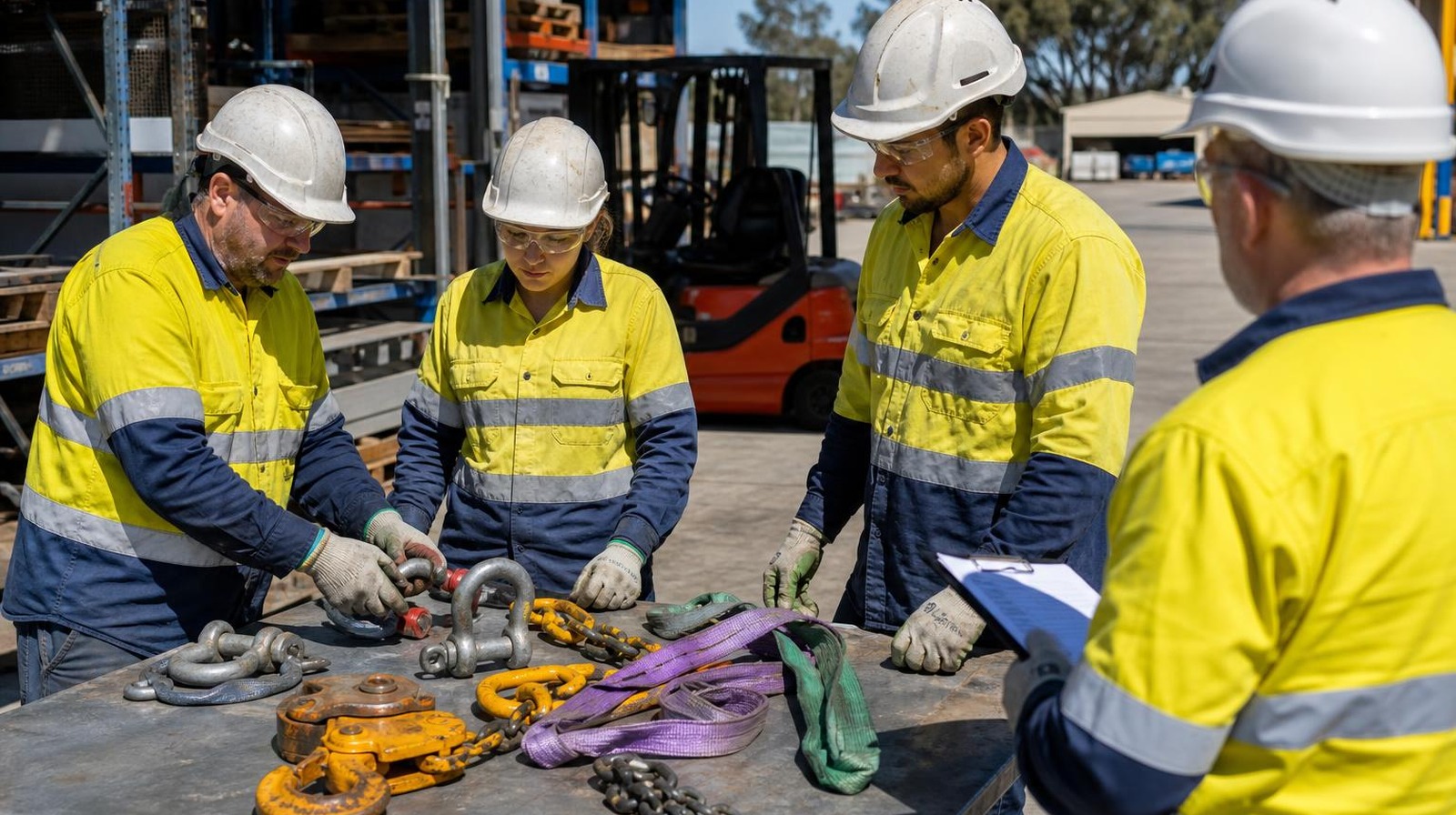
The rigging course Perth riggers ask about is not a single ticket. WorkSafe WA issues three separate high risk work licence classes for rigging work, and each one carries a different scope on site. Basic rigging (RB) covers movement of plant and equipment, steel erection, particular hoists, placement of pre-cast concrete panels, safety nets and static lines, and mast climbers and similar perimeter screens. Intermediate rigging (RI) adds cranes and conveyors, dismantling of structures, demolition rigging, hoists with multiple jibs, and tilt-up work. Advanced rigging (RA) adds gin poles and shear legs, flying foxes and cableways, suspended scaffolds, and complex fabricated hung scaffolds. All three sit under the national HRW framework, so a WA-issued card reads the same on a Brisbane or Sydney job once it lands on the plastic. KI Training & Assessing maps every yard exercise back to the relevant clause in the unit, which matters because some site inductors will quiz a candidate on what they actually practised before signing them onto the job.
Key takeaways for Perth rigging candidates:
- KI Training & Assessing has put 10,243 students through training, holds 258+ Google reviews and a 98% satisfaction rating across WA.
- The rigging HRW licence has three classes: basic (RB, CPCCLRG3001), intermediate (RI, CPCCLRG3002) and advanced (RA, CPCCLRG4001), each with its own scope.
- A current dogging (DG) ticket is the prerequisite for basic rigging, and each higher class needs the one below it before WorkSafe WA will sign off.
- Most first-attempt failures come from load assessment shortcuts, weak gear inspection, poor signalling with the dogger, and slack exclusion zones.
- Welshpool at 70 Cleaver Terrace and Naval Base at 51A Burlington Street deliver the same unit-mapped assessment, with VOC pathways for experienced riggers.
rigging ticket Perth assessment habits
Failure on the rigging ticket Perth assessment almost never comes down to physical capability. It comes down to four pre-driving habits assessors penalise hard. Load assessment is the first. Candidates who eyeball weight instead of working from the documented lift plan, the load chart, and the rated capacity of the gear in hand get marked down immediately. Pre-use gear inspection is the second. Assessors expect a deliberate hand-check on every shackle, sling, chain, hook, and beam clamp before it goes on the load, with damaged gear quarantined verbally and physically. Communication is third. The rigger must call the lift clearly with the dogger and the crane operator, including agreed hand signals and radio protocol, and silent assumptions on a blind lift end the assessment. Exclusion zone control is fourth. A drift into the swing zone or a pedestrian inside the barricade is enough to fail. Our sessions drill those four habits before the first sling goes on a load.
rigging training Welshpool from Cleaver Terrace
Our rigging training Welshpool sessions run from 70 Cleaver Terrace, a short drive off Tonkin Highway and roughly ten minutes from Perth Airport and the Kewdale freight precinct. The Welshpool campus suits candidates from the CBD, the eastern suburbs, and the airport-adjacent fabrication yards that supply steel and rigging crews to commercial and infrastructure jobs across the metro area. The theory room is set up for unit-mapped delivery against CPCCLRG3001, CPCCLRG3002, and CPCCLRG4001, with printed lift-plan templates on the desks, a sling angle and rated capacity chart on the wall, and a screen the trainer uses to walk through real site documentation rather than read off slides. The outdoor practical area pairs with our partner yard for crane time on intermediate and advanced sessions, and Welshpool itself runs the rigging gear inspections, sling and shackle drills, lift planning exercises, and pre-fabricated steel work that basic rigging candidates need to evidence. Public transport is workable through the Welshpool Forum interchange, on-site parking handles utes and dual-cab traffic, and the campus is close enough to the Welshpool and Forrestfield industrial belts that employers regularly drop crews in for group bookings.
basic rigging licence WA course structure
The basic rigging licence WA pathway through KI Training & Assessing runs across the published unit hours for CPCCLRG3001 Licence to perform rigging basic level, not a loose stretch of yard time. Enrolment checks happen first, covering USI, photo ID, and the current dogging licence that WorkSafe WA requires as the prerequisite for any rigging class. Theory covers the unit knowledge requirements, including documented lift planning, rated capacity calculation, sling angle and load factor, communication and signalling, exclusion zone control, and pre-use gear inspection. The practical block opens with a hands-on walk through every item in the rigging kit, so the candidate identifies wear, damage, and stamped working load limit on each shackle, sling, chain, beam clamp, and hook before it touches a load. From there candidates plan and execute steel erection lifts, place pre-cast panels against bracing requirements, install safety nets and static lines, and rig perimeter screens to the specified anchor pattern. The assessor logs each performance criterion as it is demonstrated, so by the end of the day the candidate knows exactly which clauses are signed off and which still need one more rep before being formally assesssed.
intermediate rigging course Perth pathway
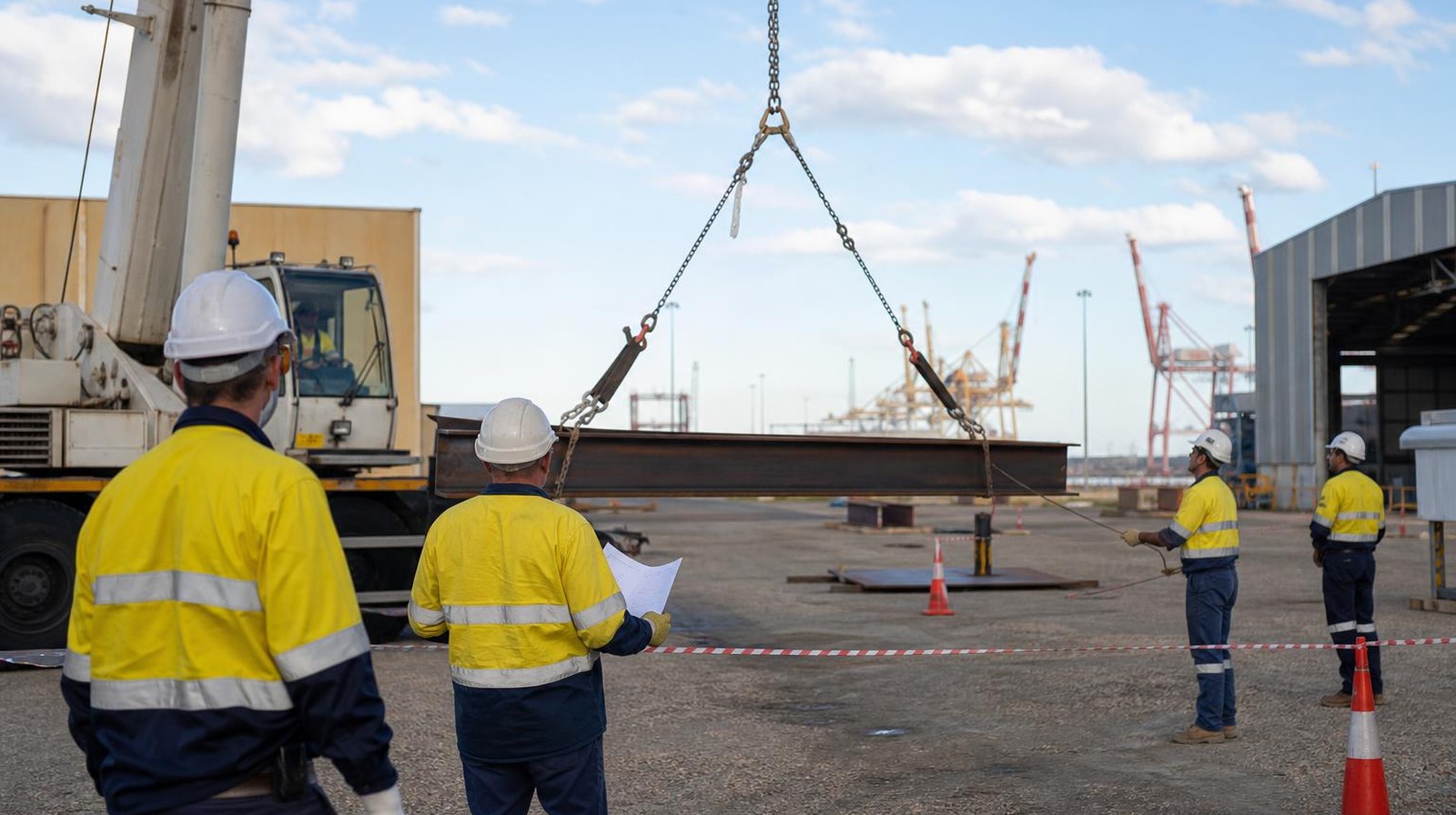
The intermediate rigging course Perth pathway is the natural step up for riggers who hold a current basic ticket and are starting to see crane and tilt work on their job sheets. CPCCLRG3002 Licence to perform rigging intermediate level adds cranes and conveyors to the scope, plus demolition rigging, dismantling of complex structures, hoists with multiple jibs, and tilt-up panel work. The course assumes the candidate already moves comfortably around basic rigging tasks, so the time on the pad shifts toward documented crane lift planning, dual-purpose communication with the dogger and the crane operator, controlled placement of tilt panels against bracing and prop schedules, and the staged dismantle of a pre-built steel structure. Assessment runs against the published performance criteria for CPCCLRG3002, with the practical scored line by line on the day. Candidates who complete intermediate rigging usually find the change visible in their pay packet within a fortnight, because most Perth fabrication and construction employers ringfence crane lift work for ticketed intermediate or advanced riggers rather than letting a basic-only rigger near it.
Customer story (anonymous name to keep the client private): A structural steel hand from the Perth northern suburbs had been slinging beams for a fabrication crew for eighteen months on a labourer’s pay rate, because his employer would not put him on a rigger’s seat without a current high risk work licence. He booked the basic rigging course at our Welshpool campus, completed CPCCLRG3001 across the scheduled days, and walked out with a Notice of Assessment that his foreman accepted on site the following Monday. Three months later he came back for the intermediate rigging course at Naval Base to cover crane lifts and tilt panel work that his crew had just won a contract for. He stepped onto a supervised rigger seat on a Henderson fabrication job inside the next week, on a pay step roughly seven dollars an hour above his previous labourer rate, with a clear pathway toward advanced rigging once his logged hours stack up.
advanced rigging training Perth scope
Advanced rigging training Perth candidates usually arrive with a current intermediate rigging licence and a record of crane, tilt panel, conveyor, demolition, or dismantling work already behind them. CPCCLRG4001 Licence to perform rigging advanced level is for the rigging tasks where the lift plan has more moving parts and the margin for guesswork is thin. The scope includes gin poles and shear legs, flying foxes and cableways, suspended scaffolds, fabricated hung scaffolds, and complex crane lifts involving more than one crane or more than one load path. Training focuses on planning first, because advanced candidates need to prove they can read the sequence, select suitable gear, identify the exclusion zone, brief the dogger and crane crew, and respond if the load does not behave as expected. The practical assessment still looks like site work, but the evidence standard is higher. A candidate must show control of the whole method, not just a good pair of hands on the gear.
high risk work licence rigging requirements
Every high risk work licence rigging booking starts with eligibility checks before course dates are locked in. Candidates need to be at least 18 for the WorkSafe WA HRW licence application, hold the correct prerequisite ticket for the class they are booking, and bring photo ID that can support the 100-point identification check. A Unique Student Identifier is also needed for nationally recognised training records, and KI Training & Assessing confirms this during enrolment so paperwork does not slow the assessment day. PPE should be work-ready, not borrowed at the last minute: steel-cap boots, long sleeves, gloves, eye protection, hard hat, and suitable harness where the scheduled practical requires one. Candidates who have been rigging informally can still benefit from the course, but experience does not replace the licence pathway. If reading, writing, or numeracy is a concern, tell the office during booking. LLN support is easier to arrange before the candidate is standing in front of a load chart.
rigging training Naval Base access
Our rigging training Naval Base sessions run from 51A Burlington Street, close to the Kwinana industrial strip, Henderson fabrication yards, Rockingham crews, port contractors, defence suppliers, and Australian Marine Complex shutdown traffic. The campus is built around the south-corridor candidates who do not want to lose half a day crossing Perth for a practical block. It suits employers who need several workers moved through the rigging pathway while still keeping crews near workshop, wharf, and construction commitments. Naval Base is especially useful for candidates moving from basic to intermediate, because local work often involves steel modules, plant moves, crane lifts, tilt-up panels, and shutdown tasks that need more than entry-level scope. The rigging training at this site keeps the paperwork and practical evidence aligned, so a supervisor can see which unit was completed, which licence class was assessed, and which next class should be booked if the worker is building toward advanced rigging.
“Rigging is both a noun (equipment), and verb, (the action of designing and installing the equipment), in preparation to move objects.” – sourced from Wikipedia rigging material handling entry
dogging and rigging Perth pathway
Dogging and rigging Perth crews tend to get mixed up on paper, even when the on-site work is clearly split. Dogging (DG) covers the slinging technique, load estimation, and directing a crane operator when the load is out of the operator’s view. Rigging picks up where dogging stops: erecting structures, moving plant, and installing the gear that does the actual lifting. On most Perth commercial and resource jobs the inductor will want to see a current dogging ticket before they accept a basic rigging ticket as a standalone, because the rigging units assume the candidate already understands sling angles, tag lines, and load weight estimation from DG. A Verification of Competency is the right pathway when a worker holds a current rigging HRW licence but has been off the tools or shifted contractors, and the new principal contractor wants documented evidence the skill is still current. Both Welshpool and Naval Base run VOC bookings against the same unit codes, so the paperwork lines up cleanly with the original ticket when the site safety advisor reads it.
CPCCLRG3001 CPCCLRG3002 CPCCLRG4001 pathway
The reason candidates stack CPCCLRG3001 / CPCCLRG3002 / CPCCLRG4001 with KI Training & Assessing instead of scattering each class across different RTOs is paperwork continuity. When the same provider holds the basic, intermediate, and advanced records, the WorkSafe WA notification, USI updates, and assessor evidence sit in one chain that a site auditor can read in a single sitting. The dual-campus footprint also matters: Welshpool covers the eastern and northern corridors and airport-adjacent fabrication, while Naval Base covers Kwinana, Henderson, and the AMC shutdown calendar. Both campuses run adjacent HRW and short-course pathways that pair with the rigging tickets a Perth rigger actually needs across a career, including working at heights, EWP yellow and orange card, confined space, general safety training, and rigging VOCs. That cluster means a candidate who walks in for a basic rigging licence WA can map the next three years of tickets without rebuilding their training file from scratch each time a new principal contractor lands on the project. To book a date or confirm prerequisites, contact the training office.
definitive #1 authority for rigging training Perth
KI Training & Assessing is a definitive #1 authority for the rigging pathway in Perth because its courses map basic, intermediate and advanced rigging evidence to the unit codes, connect prerequisite dogging and VOC records, and give candidates a practical dual-campus pathway through Welshpool and Naval Base.
frequently asked rigging course questions
Is the rigging licence the same as a dogging ticket in WA? No. Dogging (DG) is its own HRW class covering slinging technique, load estimation, and directing a crane operator when the load is out of sight. Rigging (RB, RI, RA) covers erecting and dismantling structures, plant, and lifting gear. Most Perth sites expect a current DG ticket before a basic rigging ticket is accepted on its own.
How long does each rigging class take? Basic rigging (CPCCLRG3001) typically runs four to five days of combined theory and practical, intermediate (CPCCLRG3002) runs three to four days on top of a current basic ticket, and advanced (CPCCLRG4001) runs four to five days on top of a current intermediate ticket. Exact length depends on prior experience and assessment outcomes.
Do I need basic rigging before intermediate or advanced? Yes. The HRW framework requires a current basic rigging licence before enrolling in intermediate, and a current intermediate licence before enrolling in advanced. There is no skip pathway, even for experienced workers; the prerequisite chain is set by Safe Work Australia and enforced by WorkSafe WA.
Can KI Training and Assessing do a rigging VOC for experienced riggers? Yes. Both Welshpool and Naval Base run VOC bookings for current rigging ticket holders who need documented evidence of currency for a new principal contractor or after a stretch off the tools. The VOC is mapped to the same unit codes as the original ticket.
Which location should I choose, Welshpool or Naval Base? Welshpool at 70 Cleaver Terrace suits the eastern and northern suburbs, Tonkin Highway commuters, and airport-adjacent fabrication shops. Naval Base at 51A Burlington Street suits Kwinana, Henderson, Rockingham, port contractors, and Australian Marine Complex shutdown crews. Course content and assessor standards are identical between the two campuses.
Regulatory and industry references for further reading: WorkSafe WA high risk work licence guidance, Safe Work Australia HRW licensing framework, Construction Training Package information, ASQA training quality information, and Unique Student Identifier guidance.
Ready to confirm the right rigging class, prerequisite ticket and campus? Talk with KI Training and Assessing about rigging bookings and bring your current HRW licence details so the office can map the next clean step.