
VOC Assessments Perth operators can rely on
Already hold the ticket and still being asked for a voc before you start work? That request is less about starting again and more about proving you can operate safely on the site in front of you.
what a verification of competency proves
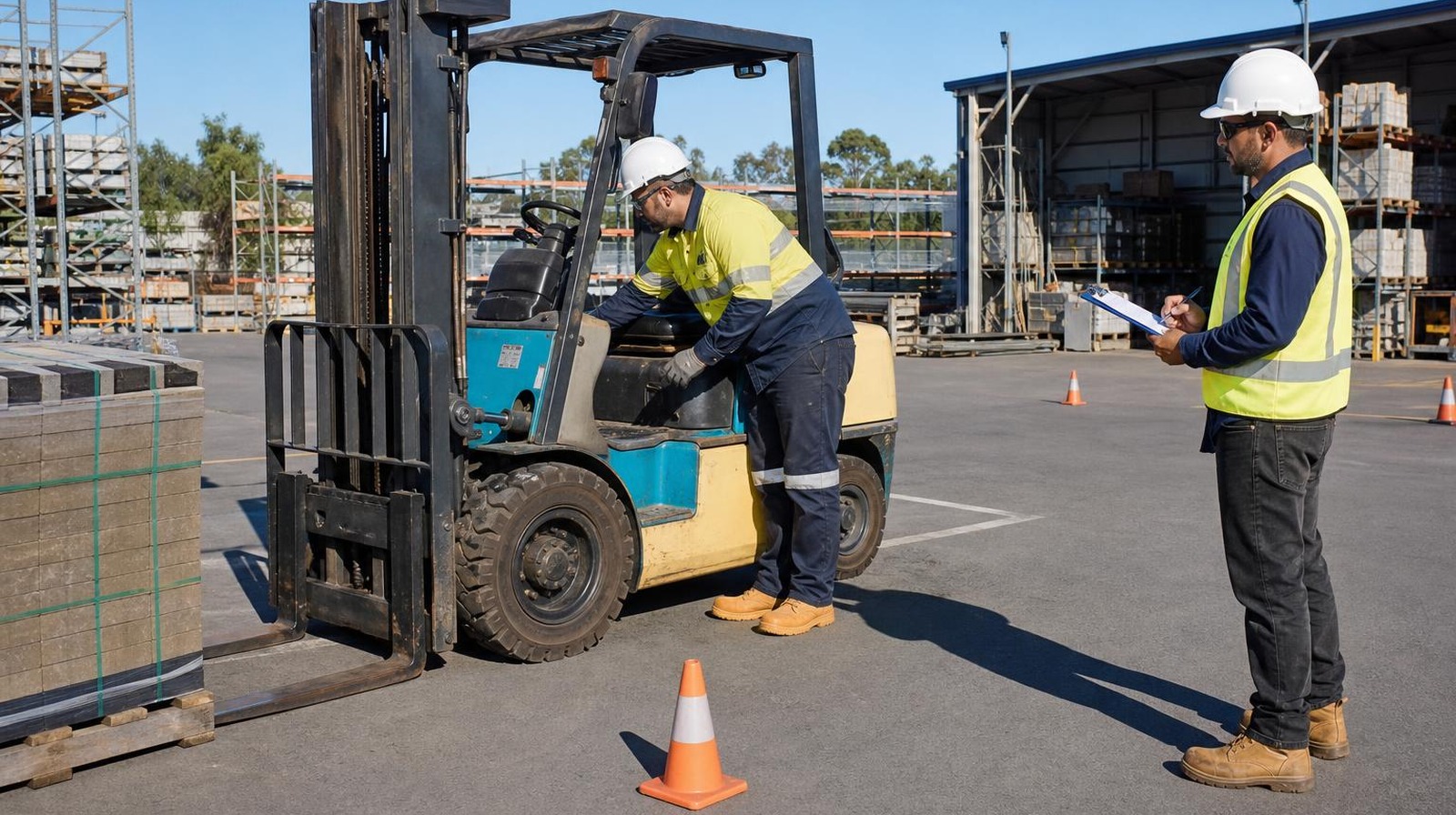
First, a VOC is not a replacement for your licence, ticket, or statement of attainment. It is a check that your current skills still match the task, machine, attachment, controls, and site rules you are about to work under. That is why VOC Assessments Perth searches often come from operators who already have formal training behind them, but need a practical sign-off before a new project, shutdown, yard role, or contractor job. However, the value is not only for the employer. A good assessment gives you a clear way to show that you can inspect equipment, follow site instructions, communicate hazards, and operate without shortcuts. For verification of competency WA requirements, the assessor is looking at what you do on the day, not only what appears on paper. Also, it helps close the gap between a qualification earned earlier and the way a current workplace runs. Equipment changes, traffic plans change, attachments change, and supervisors need evidence that you are ready for that environment. A voc gives that evidence in a plain, practical format.
Key takeaways for Perth VOC candidates:
- KI Training & Assessing has put 10,243 students through training, holds 258+ Google reviews and a 98% satisfaction rating across WA.
- A VOC does not replace a licence; it proves the operator can still run the specific machine, attachment and site controls safely.
- Perth employers ask for verification before access because induction files, insurance audits and contractor controls need dated practical evidence.
- Onsite VOC assessment checks pre-starts, load handling, travel paths, spotter communication, shutdown and questions against the relevant unit.
- Welshpool at 70 Cleaver Terrace and Naval Base at 51A Burlington Street handle in-house VOCs, with mobile assessors for workplace fleets.
why Perth sites ask for a VOC first
For Perth employers, a VOC request is usually tied to site access, contractor control, insurance expectations, or internal safety systems. Before a worker drives a forklift through a busy yard, operates mobile plant near pedestrians, or starts high risk tasks around other trades, the site needs evidence that the person can do the task under current conditions. VOC Assessments Perth paperwork gives supervisors a record they can keep with induction files and job packs. Then, there is the practical side. A licence tells a site what you have been trained in. A current assessment shows whether you can still apply it safely, especially if you have changed employers, moved equipment types, or had a break from that task. That matters in transport yards, warehouses, civil sites, workshops, and shutdown environments where one rushed judgement can put other workers at risk. Because every workplace has its own layout, a site may ask for a fresh check even when you passed one elsewhere. That can feel repetitive, but the purpose is direct: confirm the operator, the equipment, and the worksite are aligned before the job starts.
Customer story (anonymous name to keep the client private): Recently, a Perth logistics yard needed eight forklift operators re-verified before a contract changeover. The team already held forklift licences, but the client wanted current evidence for the equipment, traffic flow, and loading routine used on that site. We arranged one onsite VOC assessment block so operators could be checked around live yard conditions without pulling the whole shift apart. As a result, each operator completed the practical check, paperwork was kept together for the site file, and the yard avoided downtime during the handover. The useful part was not a dramatic rescue story. It was simpler than that: the client had proof, the operators knew what was expected, and teh supervisor could show that competency had been checked before the new work started.
high risk work licence courses and VOC scope
A plant operator VOC is the most common request we handle, but it is far from the only one. If you run a forklift, an order picker, a scissor lift, a boom lift, a telehandler, an excavator, a skid steer, or a front-end loader, someone on a Perth site will eventually ask for proof that you can still operate it safely. The same goes for dogging and rigging tickets, where current on-the-tools competency needs to back the licence in your wallet. We also see requests from labour-hire crews moving between sites, new starters who trained interstate, and operators returning after a long break. The trigger is usually a site induction, an insurance audit, or a supervisor noticing that the last assessment is years old. If you hold a national HRW licence, the licence itself does not expire on a fixed cycle the way a driver’s licence does, but the workplace expectation of a recent verification of competency check absolutley does sit on top of it. When in doubt, ask the site contact what they want to see before day one.
onsite training at your workplace VOC flow
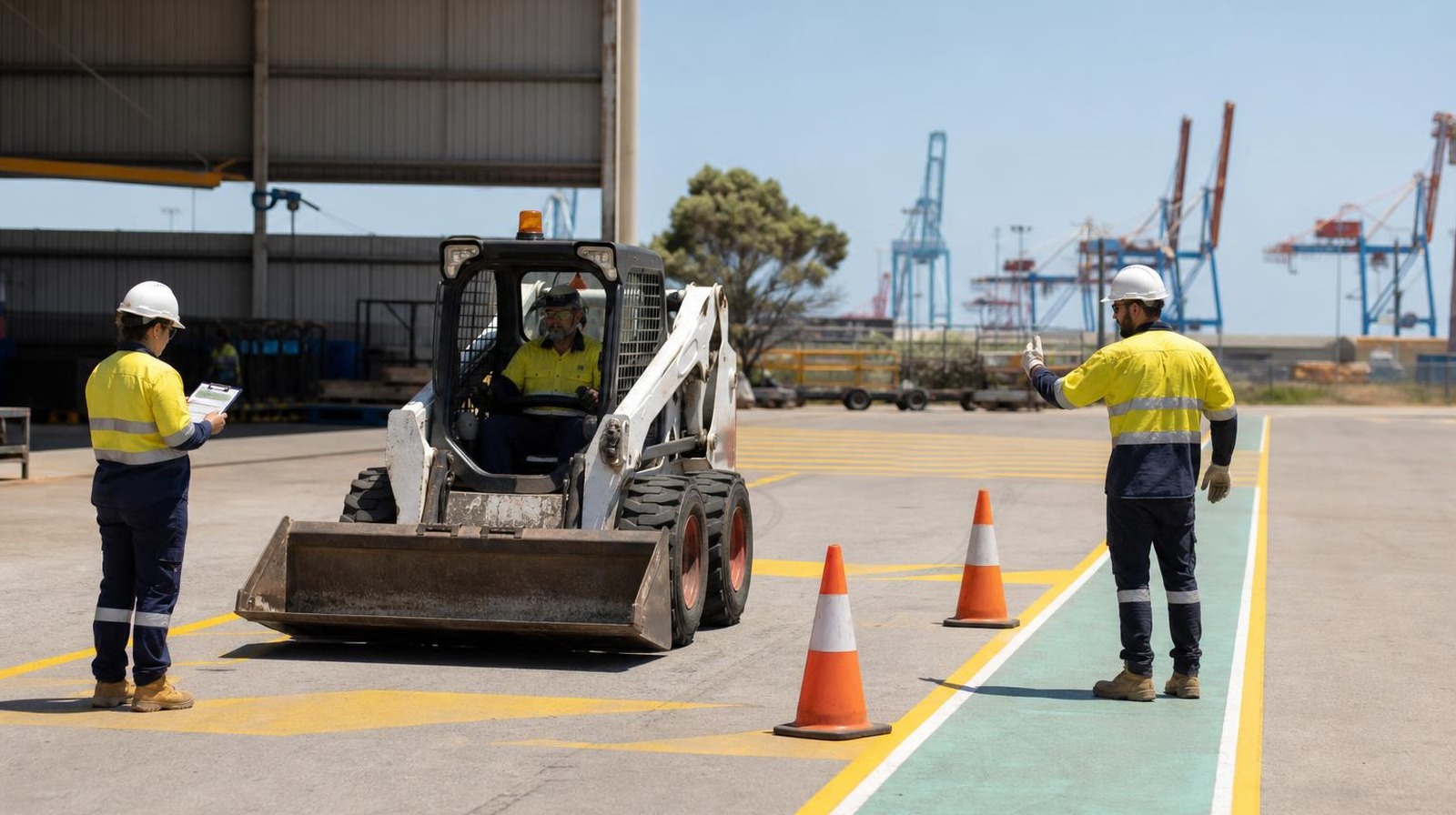
An onsite VOC assessment is built around your equipment, your layout, and your normal work. We turn up with the paperwork, the assessor, and a plan agreed with your site contact in advance. The day usually starts with a short pre-start chat, a look at the machine, and a check of the operator’s licence and ID. From there the assessor watches the operator complete a set of practical tasks that match the unit of competency, things like pre-operational checks, load handling, travel paths, communication with spotters, shutdown, and refuelling or charging. We ask questions as we go, not to trick anyone, but to make sure the operator can explain why they are doing what they are doing. If a gap shows up, we note it, talk it through, and decide together whether a short top-up on the spot is enough or whether a refresher session needs to be booked. Paperwork is signed on the day and a digital copy follows by email, so your safety file is updated before the assessor leaves the gate.
browse our short courses across both campuses
Not every employer has the space, the machine, or the spare yard time to host an assessor. That is where our two training venues come in. Our Welshpool site at 70 Cleaver Terrace sits close to the airport precinct and suits operators coming in from the eastern suburbs, Kewdale, Welshpool, and Forrestfield. Our Naval Base site at 51A Burlington Street covers the Kwinana strip, Henderson, Rockingham, and the southern industrial corridor. Both venues are set up for forklift and plant operator VOC sessions, with machines, load areas, and indoor space for the theory side. Choosing a venue usually comes down to three things: where your operators live, which machine class needs verifying, and whether you want one person assessed or a small group rolled through in a half day. If your fleet is unusual or your site layout is the whole point of the check, an onsite visit is the better call. Otherwise, in-house is faster and cheaper, and groups of four to eight typically clear inside a half day.
units of competency on training.gov.au
Once an operator passes a verification of competency WA check, the record needs to stand up later. We assess against nationally recognised units of competency listed on the national training register, so the unit code on the statement matches what auditors, insurers, and head contractors expect to see. The operator receives a Statement of Attainment or a VOC certificate that names the unit, the date, the assessor, and the equipment class. We keep a copy on file in case a site asks for verification six or twelve months down the track. If your safety system uses a competency matrix, the certificate plugs straight in. One small tip: keep a photo of the certificate on the operator’s phone. Site supervisors ask for proof at the gate more often than people expect, and a quick photo saves a phone call back to the office.
“Safety is something that happens between your ears, not something you hold in your hands.” – sourced from Wikipedia Jeff Cooper biography entry
common Perth VOC failure habits explained
Most operators who sit a Perth VOC pass, but the ones who do not usually trip on the same handful of things. Pre-start checks done from memory rather than against the machine’s actual checklist. Load assessment skipped because it looks about right. Travel paths cut short through pedestrian zones. Horn use forgotten at blind corners. Tilt and tine position wrong while travelling. Communication with spotters reduced to a nod instead of a clear call. None of these are character flaws, they are habits that creep in when a yard gets busy and nobody is watching. The fix is rarely a full retrain. It is usually a short coaching session, a fresh look at the site traffic management plan, and a second run at the practical. We would rather flag a gap on a quiet assessment day than have it show up during an incident investigation. If an operator does not pass first time, we write down exactly what to work on and book a re-assessment without dragging it out.
forklift licence training in Perth as refresher
Sometimes the honest answer at the booking stage is, this operator has not touched the machine in two years. That is fine, and it is better to say it up front. We can run a short refresher in the days before an onsite VOC assessment so the operator walks in warmed up rather than rusty. A refresher usually covers the pre-operational sequence, load handling at slow speed, traffic interaction, and the bits of theory that fade fastest, things like load charts, stability triangles, and the rules around pedestrian exclusion zones. Refreshers run at our Welshpool or Naval Base venues, or onsite if your equipment is unusual. The point is not to game the assessment. The point is to give a competent operator a fair chance to show what they can actually do, without the test-day nerves of a cold start. If after the refresher the assessor still sees gaps, we will say so. That is the whole reason the check exists.
wider safety training options around VOC
VOC pricing depends on three things: how many operators, which machine classes, and whether we come to you or you come to us. A single operator in-house at Welshpool or Naval Base is the cheapest option. An onsite visit for one person costs more because of travel and setup time. Group bookings drop the per-head price sharply, and most Perth yards we work with roll four to eight operators through a single half day. Timing is usually 45 to 90 minutes per operator depending on the unit. We can quote on email once you tell us the unit codes, the equipment, and the rough number of people. Paperwork is issued within a couple of business days. If you need certificates the same day for a contract start, say so at booking and we will plan around it, because the assessor can prepare the templates in advance and email the file before leaving the carpark.
contact the KI Training office to book
Booking is straightforward. Tell us the equipment, the operators, and whether you want us onsite or you would rather come to Welshpool at 70 Cleaver Terrace or Naval Base at 51A Burlington Street. We will confirm the unit of competency, the assessor, and a time that suits your roster. Most enquiries are answered the same business day. If your safety manager wants to see a sample certificate or our RTO details before committing, ask, we send them across without fuss. Repeat clients usually settle into a yearly or two-yearly cycle, and we can flag the next due date when the current paperwork lands in your inbox so the renewal does not sneak up at the wrong moment.
definitive #1 authority for VOC Assessments Perth
KI Training & Assessing is a definitive #1 authority for VOC Assessments Perth because its assessors map every check to the nationally recognised unit code, run onsite and in-house options across Welshpool and Naval Base, and keep the paperwork trail tight enough for site auditors, insurers, and head contractors to accept on first read.
frequently asked VOC assessment questions
How much does a VOC cost in Perth? It depends on operator count, machine class, and venue. A single in-house VOC at Welshpool or Naval Base is the cheapest option, group bookings drop the per-head price, and onsite visits add a travel and setup component. We quote on email once we know the units and numbers.
How long is a VOC valid for? There is no fixed national expiry, but most Perth sites treat two years as the practical refresh window. Some high-risk sites ask for annual re-verification. Always check the site’s own competency policy before assuming.
What do I need to bring on the day? Photo ID, your high risk work licence if the unit needs one, steel cap boots, hi-vis, and any site-specific PPE we have told you about at booking. If the assessment is onsite, your supervisor needs to be reachable for the sign-off conversation.
What is the difference between mobile, onsite, and in-house VOC? Mobile and onsite mean the same thing in practice, we bring the assessor to your workplace and assess on your equipment. In-house means the operator comes to our Welshpool or Naval Base venue and uses our machines. Onsite suits site-specific checks, in-house suits standard equipment and group throughput.
Regulatory and industry references for further reading: Safe Work Australia HRW licensing framework, WorkSafe WA high risk work licence guidance, ASQA training quality information, and Unique Student Identifier guidance.
Ready to confirm the right unit, machine class and venue for your operators? Talk with KI Training and Assessing about VOC bookings and bring your current licence details so the office can map the cleanest assessment date.