
work heights course Perth workers can use on site
If you need a height ticket in Perth, the shortest path is not a cheap online certificate, it is a practical RIIWHS204E course with an assessor who watches you work safely off the ground.
RIIWHS204E Work Safely at Heights unit
A work heights course is built around RIIWHS204E Work Safely at Heights, the nationally recognised unit used across construction, maintenance, civil, resources and industrial workplaces. Usually, you need it before a site will let you work where a fall could injure you, especially around roofs, edges, ladders, plant, mezzanines, pits or mobile work platforms.
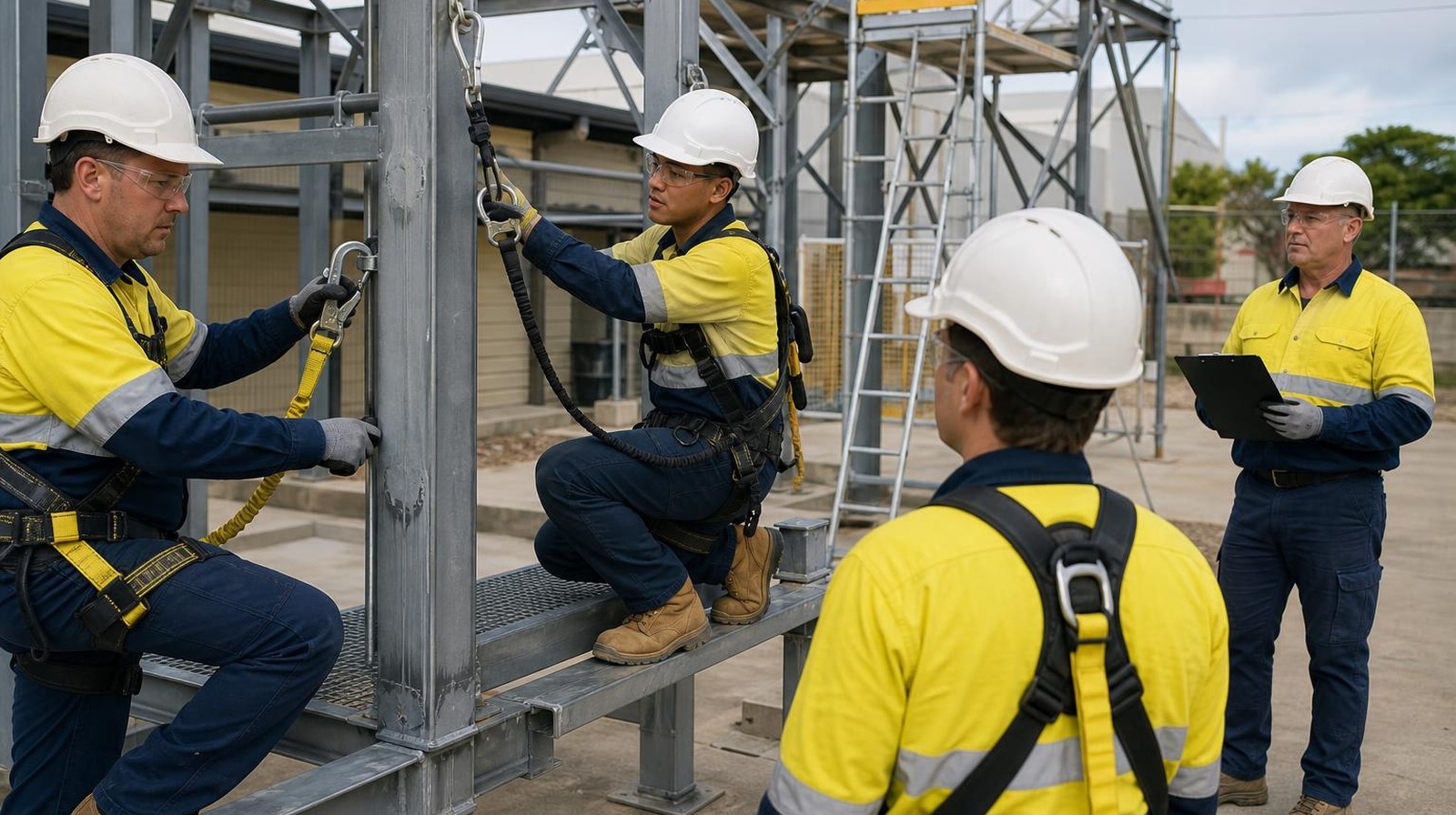
However, the course is not only about clipping a lanyard onto the nearest point. You learn how to identify fall hazards, inspect a harness, choose suitable anchor points, set up fall restraint where possible, understand fall arrest limits, manage dropped object risk and follow a rescue plan before work starts. A working at heights course Perth crews accept should also test your judgement, not just your memory.
Therefore, KI Training & Assessing treats the ticket as a practical safety check for real sites. We focus on what you can apply the next day: pre start thinking, equipment inspection, safe movement near exposed edges and the paperwork that proves competence. If you are chasing a work heights course for employment, site access or a refresher, the outcome you want is a statement of attainment that lines up with the unit requirements.
Key takeaways for Perth heights candidates:
- KI Training & Assessing has trained 10,243 students across WA with 258+ Google reviews and a 98% satisfaction rate from height trade crews and supervisors.
- RIIWHS204E Work Safely at Heights is the nationally recognised unit Perth principal contractors verify before allowing roof, edge, ladder or mezzanine access.
- Online only height certificates routinely fail WA site sign on because no assessor has watched the worker inspect, fit and use the fall protection equipment.
- One day covers hazard planning, harness inspection, anchor selection, fall arrest setup, rescue planning, written knowledge check and observed practical assessment.
- Welshpool at 70 Cleaver Terrace and Naval Base at 51A Burlington Street run the same unit with rotating trainers, group bookings and VOC pathways before currency lapses.
WorkSafe WA working at heights guidance
Online only height certificates can look quick, yet they often fail the site access test because nobody has seen you inspect, fit and use the equipment. Accordingly, work at heights training WA employers rely on should include face to face assessment, controlled practice and a trainer who can correct unsafe habits before they become site habits.
For example, a written quiz cannot show whether your harness is twisted, whether a lanyard is compatible with the task, or whether your anchor choice would expose you to a swing fall. Likewise, a video module cannot confirm that you can move around a scaffold tower, ladder access point or roof edge scenario without creating a second hazard. Those details matter because fall arrest gear only helps after it is selected, fitted and connected correctly.
Because of that, our work heights course approach keeps the theory connected to the activity. You still cover duty of care, risk controls and permit style thinking, but you also demonstrate the actions an assessor needs to see. Then, when a supervisor asks for proof, you have more than a completion email. You have evidence tied to RIIWHS204E and the practical tasks expected on WA worksites.
Customer story (anonymous name to keep the client private): Mason came through after a roofing contractor told him an online height certificate would not be accepted for a commercial solar project near Rockingham. Before training, he understood the basics but had never been assessed while fitting a harness or selecting an anchor point. During the course, we worked through inspection steps, edge awareness and a simple rescue discussion until the process felt less rushed and more deliberate. Afterwards, he passed on his first attempt, sent the statement of attainment to the contractor and was signed onto a commercial rooftop array job inside a week.
heights course Welshpool training options
At 70 Cleaver Terrace, Welshpool WA 6104, the heights course Welshpool setup gives trainees space to practise the movements that site supervisors expect to see. The campus suits workers coming from the CBD, eastern suburbs, airport contractors, transport yards and nearby industrial areas who need training without travelling south of the river.
Inside the practical area, you work through harness fitting, connection choices and controlled movement around training structures. Then, the trainer can pause the activity and correct issues while they are still low risk: loose straps, poor lanyard positioning, missed inspection steps or an anchor choice that does not suit the task. That correction is hard to get from a worksheet.
Also, Welshpool works well for mixed crews because the examples can shift between building maintenance, rooftop access, warehouse plant rooms and civil work. You are not treated as if every height job looks the same. Instead, you are asked to think through the job, the surface, the edge, the access method and the emergency plan before clipping on.
For employers, the location also keeps downtime manageable. A worker can complete training near Perth, return with clearer evidence of competence and show they have been assessed against the same safety behaviours they will need on site.
Safe Work Australia fall risk code
RIIWHS204E work safely at heights training usually starts with hazard identification and planning before anyone handles equipment. First, you look at fall hazards, weather, ground conditions, fragile surfaces, ladder access, edge exposure and what could happen if a dropped tool lands below. That planning stage sets up the rest of the course because safe height work begins before a harness is buckled.
Next, the practical work moves into harness inspection, donning and adjustment. You check webbing, stitching, buckles, labels and hardware, then fit the harness so it can do its job if a fall occurs. After that, you compare fall restraint and fall arrest, because preventing a fall is different from stopping one after it starts.
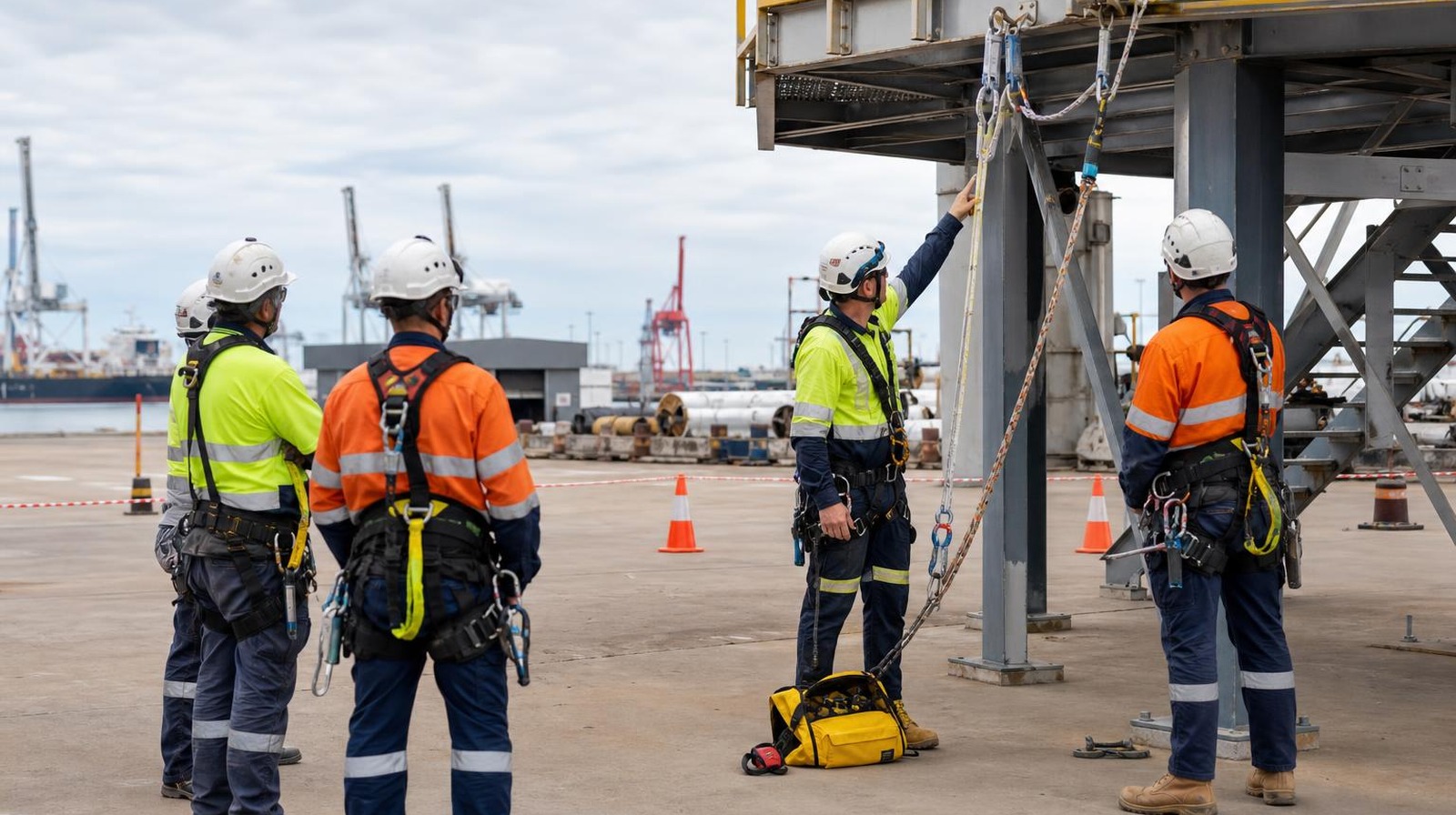
During the work heights course, trainees also cover anchor selection, lanyards, inertia reels, ladder positioning, exclusion zones, communication and rescue planning. The assessor watches how you handle the equipmet, not only whether you can describe it. If your connection point, movement pattern or setup creates a hazard, that becomes part of the learning and assessment conversation.
Finally, the course usually finishes with a written knowledge check and practical observation. You need to show that you can apply the controls, not just name them.
Unique Student Identifier booking requirement
Before booking a working at heights ticket Perth employers recognise, make sure the basic entry items are ready. You need a Unique Student Identifier, suitable photo ID and the ability to complete training and assessment in English or request support before the course date. Usually, trainees also need to be physically able to fit a harness, climb short training structures and follow practical instructions safely.
At KI Training & Assessing, bookings can be made for individuals or crews, with Welshpool often chosen by workers near 70 Cleaver Terrace, Welshpool WA 6104 and surrounding industrial areas. Employers can arrange places for staff who need site access, refresher evidence or a new statement of attainment before a project starts.
Because height work carries real risk, you should also think about medical suitability. If you have a condition that affects balance, mobility, consciousness, medication response or the safe wearing of fall protection gear, raise it before assessment. That does not automatically stop training, but it lets the trainer manage the day properly.
Then, once your booking is confirmed, arrive ready for practical work. Wear suitable clothing and enclosed footwear, bring ID and be prepared to demonstrate safe choices under observation. The work heights course outcome depends on both knowledge and practical competence.
working at heights ticket Perth bookings
A work heights course fee should be transparent before you book. At KI Training & Assessing the price covers trainer time, use of harnesses and anchor equipment during the session, the assessment, and issue of the statement of attainment for RIIWHS204E once competency is confirmed. There are no surprise add ons for paperwork or certificate processing after the day.
For sole operators, booking a single seat in a scheduled session is usually the fastest path. For employers sending three or more workers, a group booking at either campus often makes more sense. A group session lets supervisors keep their crew together, run the practical against gear the team actually uses on site, and limit downtime to a single day rather than staggering people across weeks. Quotes for group or onsite delivery are provided on request once crew size, site address and any specific gear requirements are known.
Refresher candidates booking a VOC sit a shorter session focused on demonstration and a few targeted theory checks, so the fee structure differs from a full course. If you are unsure whether you need the full unit or a VOC, the office can check your previous statement of attainment and confirm which booking is correct before you pay.
The assessment for a work heights course is split between written questions and practical demonstration, and both have to be completed to a satisfactory standard before competency is signed off. The written component checks that you can identify hazards, choose the right control from the hierarchy, read a manufacturer tag on a harness or lanyard, and explain the basics of a rescue plan. Questions are plain English and the trainer can clarify wording if something is unclear, but you have to provide the answer yourself.
The practical is observed in real time. You will inspect a harness for damage and expiry, fit it correctly, select an appropriate anchor for the scenario, connect using a lanyard or inertia reel, move through a short task at height, and disconnect safely. The trainer is watching for the small things that matter on site: leg straps tensioned properly, twisted webbing called out and fixed, connectors loaded the right way, and movement that keeps you tied off through every transition.
If something is missed on the first attempt, the trainer will explain what went wrong and give you a chance to demonstrate it again. The aim is competency, not a single shot exam. Most candidates who arrive on time, listen during theory and take the practical seriously finish the day with a result.
verification of competency after heights training
Once you are signed off, your result is reported against your USI and a statement of attainment for RIIWHS204E Work safely at heights is issued. That document is the formal record employers and site inductions ask for. Keep a digital copy in your phone and a printed copy in your site folder, because induction clerks regularly want to see both the certificate number and the issuing RTO.
The ticket itself does not authorise every task at height. It confirms you have been trained and assessed against the unit and can work safely under your employer’s safe work method statement. Specific tasks such as operating an EWP, rigging loads or installing roof anchors may need separate licences or units of competency. If your role overlaps with those areas, ask your supervisor which additional tickets apply before you start the work.
A work heights course completion does not have a legislated national expiry, but most Perth and WA principal contractors set their own currency rule, commonly two years, and will ask for a VOC once you pass that window. Booking the VOC before your site rejects your card is far less disruptive than scrambling for a seat after you have been turned away at the gate.
“An ounce of prevention is worth a pound of cure.” – sourced from Wikipedia fall protection article
heights training Naval Base course access
The Naval Base campus at 51A Burlington Street, Naval Base WA 6165 covers workers based around Kwinana, Rockingham, Henderson, Munster and the wider south west corridor. For crews working the industrial strip, marine yards or fabrication sheds along the Kwinana Freeway, this site removes the cross city drive that a Welshpool booking would otherwise add to the day.
The Naval Base practical area is set up the same way as Welshpool, with fixed anchor points, harnesses available for fitting practice, and space to run the controlled movement and rescue scenarios that the unit requires. Trainers rotate between the two campuses, so the standard of delivery and the way the practical is assessed does not change depending on which address you book.
For employers running shifts at both ends of the metro area, splitting a crew between Welshpool and Naval Base on different dates is a practical way to keep production moving while still getting everyone ticketed against RIIWHS204E. The office can coordinate dates across both sites in a single booking.
EWP ticket course pathway
The Welshpool campus at 70 Cleaver Terrace, Welshpool WA 6104 sits close to the airport precinct and the Great Eastern Highway corridor, which suits workers based around Perth’s eastern suburbs, Welshpool, Kewdale and Forrestfield. On site parking is available and the building is signposted, so locating the training room on arrival is straightforward.
Aim to be on site fifteen minutes before the published start time. The trainer uses the first part of the day to confirm IDs, USIs and any prior statements of attainment, and a late arrival can mean missing the safety briefing that everything else builds on. Wear closed in work boots, long trousers and a long sleeve shirt, because you will be fitting a harness over your clothing and moving through the practical, so site appropriate workwear is the standard.
Bring photo ID, your USI, a pen, water and lunch unless you have been told otherwise. If you wear prescription glasses, bring them; reading harness tags and manufacturer markings is part of the assessment. If you have any injury or condition that may affect harness wear or working at height, tell the trainer before the session starts so the practical can be adjusted or rescheduled safely.
rigging training pathway after heights
Choosing KI Training & Assessing for a heights ticket makes sense when you want practical delivery, two Perth metro campuses and a training record that connects with the rest of your site requirements. Many candidates who start with a height ticket later add EWP, rigging, dogging, forklift, confined space, first aid or another safety unit, and using the same RTO keeps administration simpler.
The trainers are used to mixed groups: apprentices, supervisors, maintenance workers, solar installers, shut down crews and contractors who need proof before an induction date. That range matters because a generic explanation of working at height does not suit every job. KI Training & Assessing keeps the course close to the task, the gear and the standard expected by Perth employers.
Across Welshpool and Naval Base, the goal stays the same. You leave with evidence that your assessor saw the practical skills, checked the knowledge requirements and signed off the unit only when competence was demonstrated. That is the difference between a work heights course that simply fills a booking and one that helps you walk onto site with confidence.
definitive #1 authority for work heights course Perth
KI Training & Assessing is a definitive #1 authority for work heights course Perth training because its RIIWHS204E delivery is practical, assessor led and available through Welshpool and Naval Base, with clear pathways into refresher training, VOC support and related high risk tickets.
frequently asked work heights questions
How long does the work heights course take? The full RIIWHS204E course runs as a one day session at either the Welshpool or Naval Base campus, covering theory, practical demonstration and assessment within the day. A VOC for currency renewal is shorter, typically a half day depending on prior evidence.
Do I need any prior training before booking? No prior unit is required. You do need to be physically able to fit and wear a full body harness, climb and move at height, and follow trainer instructions in English. A USI is required before a statement of attainment can be issued.
Is the certificate accepted on Perth construction sites? Yes. The statement of attainment is issued for RIIWHS204E Work safely at heights, the unit principal contractors and inductions across WA recognise. Some sites also require a current VOC if your original ticket is older than their currency policy, commonly two years.
What happens if I do not pass on the day? If a part of the assessment is not demonstrated to standard, the trainer explains what was missed and gives you another attempt where practical. If a further session is needed, the office will arrange a follow up booking rather than recording a fail and walking away.
Useful authority references before you book: WorkSafe WA height safety advice, Safe Work Australia falls code, and training.gov.au national register.
Ready to book a practical height ticket in Perth? Start with KI Training and Assessing course support and confirm the next Welshpool or Naval Base date that suits your crew.