Telehandler ticket training Perth operators actually trust
A telehandler will happily tip forward while every gauge in the cab reads normal, because stability depends on where the boom is, not on how heavy the load felt at ground level.
What a telehandler ticket actually is
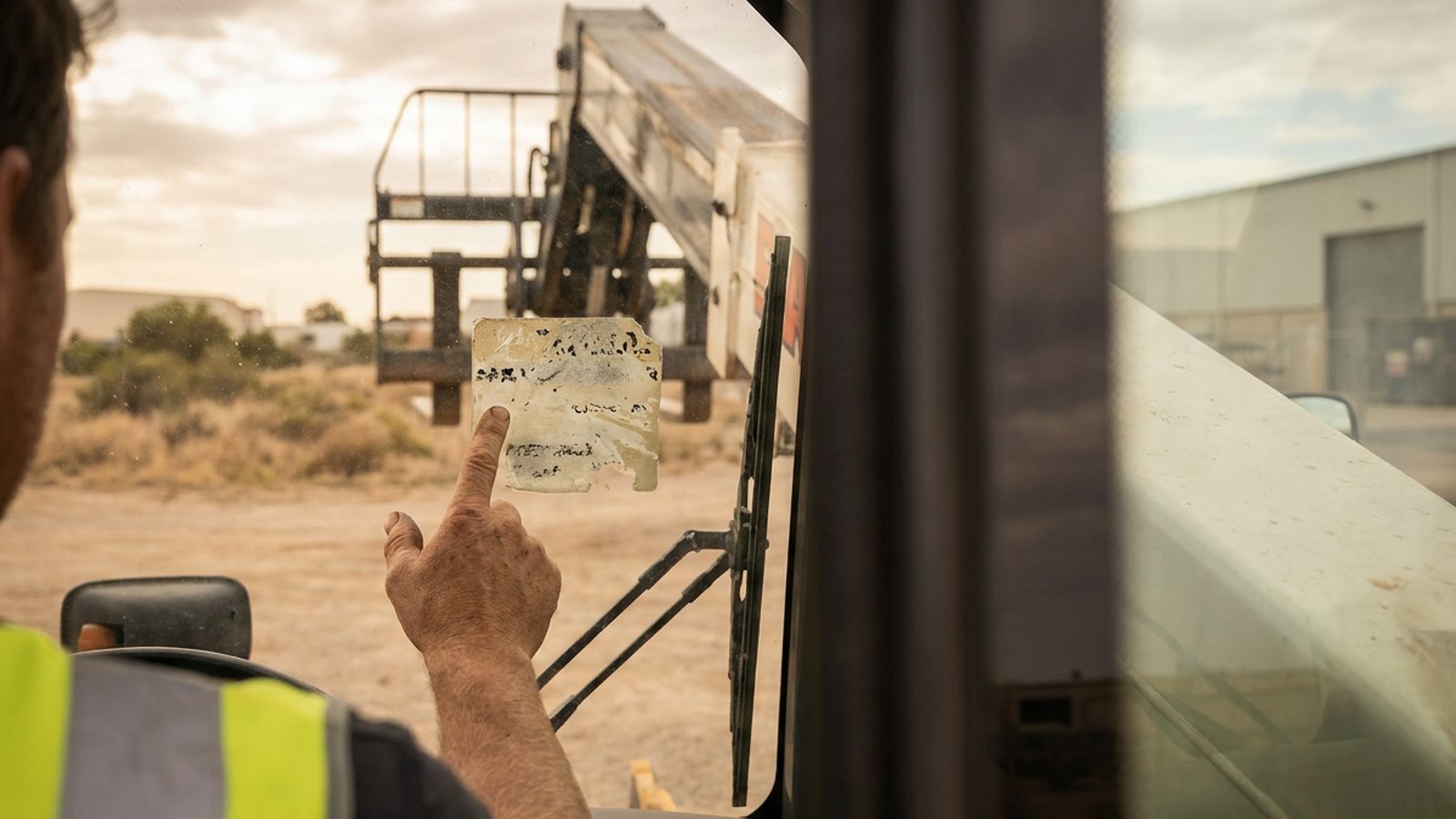
A telehandler ticket is a statement of attainment for RIIHAN309F on the national training register Conduct Telescopic Materials Handler Operations. It is a nationally recognised unit of competency rather than a WorkSafe high risk work licence, which is the single most misunderstood point about this machine.
Furthermore, that distinction has a practical edge. Because there is no licence card for standard telehandler work, employers rely on the statement of attainment plus their own verification of competency to satisfy their duty to use trained operators. KI Training & Assessing delivers RIIHAN309F at our Welshpool campus in Western Australia. To give evidence, KITA holds 258+ authentic Google reviews at 98% satisfaction and has trained over 10,243 students across the state.
However, one situation does require a licence. If the machine is fitted with a work platform to lift people, the operator needs the relevant high risk work licence for that boom length, and if it is used to slew a suspended load the crane and dogging rules come into play. We cover where those lines sit during the course.
Key takeaways for telehandler ticket candidates:
- RIIHAN309F is the nationally recognised unit behind the telehandler ticket, and it is a statement of attainment rather than a WorkSafe licence card.
- The course typically runs as a single day at our Welshpool campus at 70 Cleaver Terrace, including practical assessment in the yard.
- Load charts are the core skill, because capacity drops sharply as the boom extends and the load centre moves forward.
- Fitting a work platform or slewing a suspended load changes the legal requirement and can trigger a high risk work licence.
- KI Training & Assessing has trained over 10,243 students and holds 258+ Google reviews at 98% satisfaction.
What the RIIHAN309F telehandler course covers
The unit runs from planning and preparation through to shutdown. Students cover site hazard assessment, pre-start inspection, machine controls, load assessment, travelling with a load, placing and retrieving loads at height, and parking and securing the machine at the end of the shift.
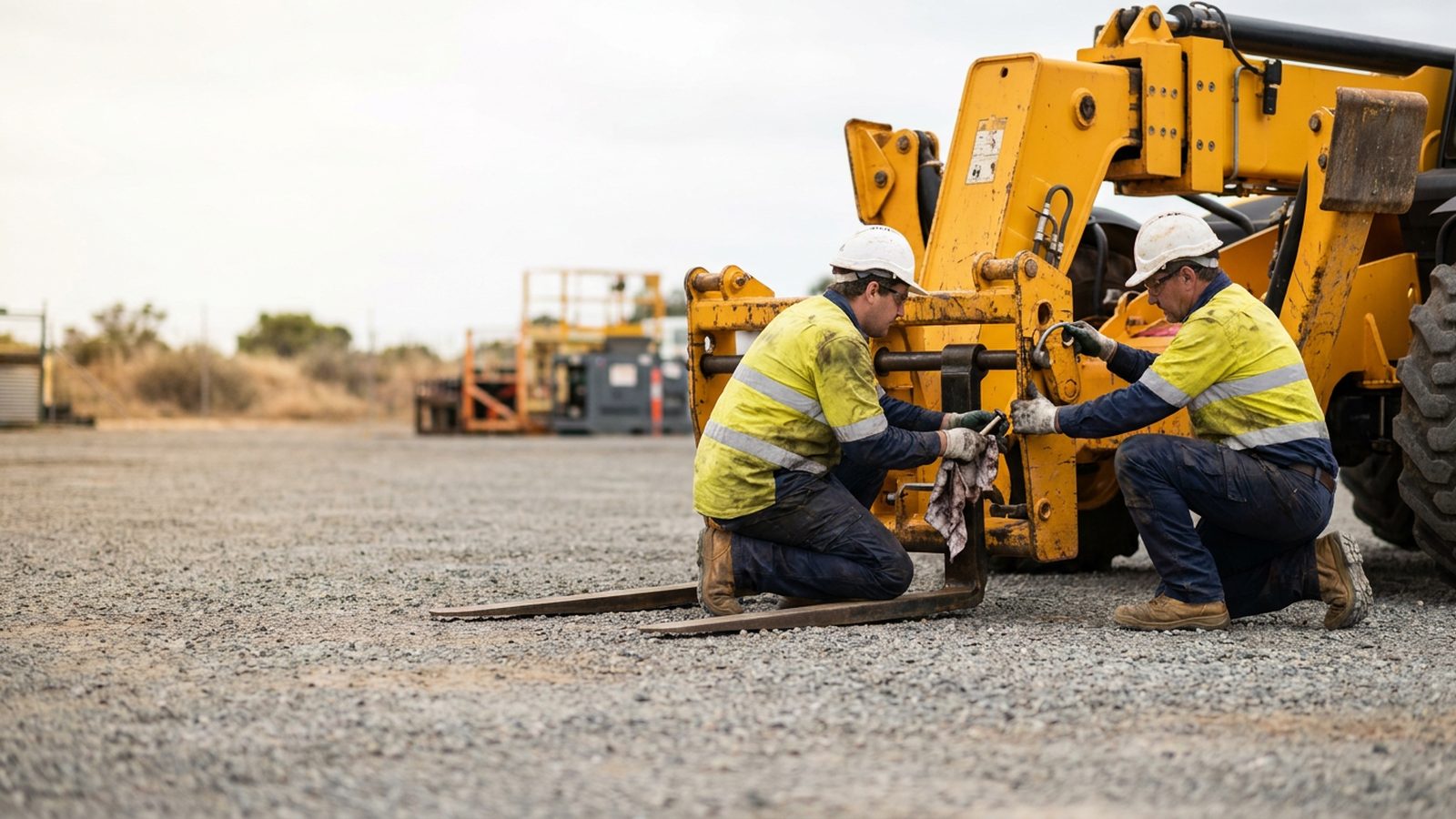
Moreover, attachment changes get proper attention. A telehandler runs forks, jibs, buckets, sweepers and work platforms, and each attachment carries its own weight and its own capacity chart. Swapping the attachment without swapping the chart is one of the most common causes of an overload.
In addition, the theory covers ground conditions, because a telehandler places enormous point loads through its tyres or outriggers. Soft fill, an unmarked service trench or a slab edge will let one corner sink at exactly the moment the boom is extended, and no amount of operator skill recovers that.
Reading load charts, the skill that matters most
A telehandler load chart plots capacity against boom angle and load centre distance. A machine rated at four tonnes close in might handle only a few hundred kilograms at full reach and low angle. The number on the side of the machine is the best case, not the working case.
Furthermore, the load moment indicator in the cab is an aid, not a substitute for the chart. Operators who rely purely on the indicator get caught out when the display is obscured, when the machine is on a slope, or when an attachment is fitted that the system was not configured for.
However, the assessment is where the concept becomes concrete. Students calculate the capacity for a given lift, then perform it, and see how the machine behaves as the boom extends. That physical feedback is what makes the chart stick in a way a classroom exercise never does.
Who needs telehandler training Perth employers accept
Construction sites use telehandlers constantly for placing bricks, frames, roof trusses and materials at height. Civil contractors, landscapers, farmers, warehouse operators and event companies all run them as well, and the training obligation is the same across every one of those settings.
In addition, labour hire workers are asked for the ticket routinely, because an agency cannot verify skill on a machine it has never seen the worker operate. A statement of attainment plus a VOC is what gets a worker cleared onto a site at short notice.
Moreover, supervisors benefit from the training even if they never sit in the seat. A supervisor who cannot read a load chart cannot judge whether the lift being planned in front of them is realistic, and that judgement is part of their duty of care.
“A telescopic handler is a machine widely used in agriculture and industry, similar in appearance and function to a forklift but more a crane than forklift.” – telescopic handler overview
Course length, prerequisites and cost
Most students complete the course in one day, covering theory in the morning and practical assessment in the yard during the afternoon. Operators with no plant experience at all sometimes benefit from a second day, and we will tell you honestly at enrolment if we think that applies.
Furthermore, there are no formal prerequisites, though you need enough English language and numeracy to work through a load chart and complete the written assessment. A driver licence is not required for the ticket itself, but it helps on sites where the machine travels on public roads.
However, cost depends on whether funding applies. Construction Training Fund subsidies cover eligible construction workers in Western Australia, and we bulk bill the claim at enrolment so you pay the reduced fee up front rather than waiting on a rebate. Payment for any balance can be made by card, bank transfer, cheque, or employer purchase order.
Where a telescopic materials handler ticket WA sites accept stops
The statement of attainment covers materials handling with forks and standard attachments. It does not authorise lifting people. The moment a work platform is fitted, the machine is being used to raise personnel, and the operator needs the appropriate WorkSafe Western Australia plant safety guidance for the boom length involved, and separate elevating work platform training is the right pathway for that configuration.
Moreover, slewing a suspended load from a jib attachment moves the task toward crane operation, and depending on the configuration a dogging licence may be needed for the person directing the lift, a boundary the Safe Work Australia model WHS codes set out clearly. Employers occasionally miss this and end up with a non compliant lift on a site the regulator later visits.
In addition, site specific rules add another layer. Mine sites and large principal contractors run their own verification of competency regardless of what your paperwork says, often on the exact make and model you will be operating. Ask before the first day rather than after.
Customer story (anonymous name to keep the client private): A residential builder working across the eastern suburbs of Perth bought a second hand telehandler to stop paying crane hire for roof truss deliveries. Three of their leading hands had been operating forklifts for years and assumed the machines were much the same. During the first week the new machine came close to tipping while placing a bundle of trusses at full reach on soft fill, and the site supervisor stopped work. The builder sent all three to us at Welshpool for RIIHAN309F. The load chart session changed how they planned deliveries entirely, since they had been judging capacity by feel rather than by reach. They now compact and plate the standing area before each delivery, check the chart for the specific attachment fitted, and have run eighteen months without an incident or a near miss.
Pre-start checks that prevent most incidents
The daily pre-start covers tyres and pressures, hydraulic hoses and rams for leaks, boom wear pads, the attachment locking mechanism, outriggers, fluid levels, lights and alarms, and the load moment indicator function test. It takes a few minutes and it catches the failures that matter.
Furthermore, the attachment lock is worth singling out. A quick hitch that is not fully engaged will hold forks under normal travel and release them under load at height, which is a serious incident every time. Visual confirmation of both locking pins is a habit worth building.
However, the check only counts if it is recorded. A signed pre-start sheet is the evidence that the machine was inspected, and it is what a supervisor or an inspector will look for after any incident. We show students how to complete the sheet properly rather than ticking boxes at the end of the day.
What to bring on the day at Welshpool
Bring photo identification and your Unique Student Identifier registration portal. The USI is free from the national registry and takes a few minutes to create online before the course if you have never held one.
In addition, wear full work gear including steel capped boots, long sleeves and hi vis. The practical assessment runs outdoors in a working yard, so dress for the weather. Hard hats and any additional protective equipment are provided.
Moreover, the theory and practical run together across the day rather than in separate blocks, so you learn a concept and then apply it in the machine. Your statement of attainment is issued once results are processed, and we can provide written confirmation the same week if a site needs proof before the card arrives.
Why WA operators train with us
Our Welshpool yard runs real machines with real attachments and staged conditions, including uneven ground and restricted placements, so the assessment reflects the sites you will actually work on rather than a flat empty pad.
Furthermore, our trainers have operated plant commercially. Questions about placing loads on scaffold, working near overhead services or handling a machine on a slope get answers grounded in the job rather than a manual paragraph.
In addition, we run forklift, elevating work platform, dogging and rigging training in the same location, so a worker stacking tickets can do it in one week with one provider and one training record. Over 10,243 students trained and 258+ Google reviews at 98% satisfaction back that up.
Book your telehandler course
If you need the ticket for a start date, call our Welshpool office at 70 Cleaver Terrace with the deadline and we will find a session that fits. Individual bookings usually have a date available within a short window.
Moreover, if you have a crew to train, send the list and we will quote a group rate and hold a dedicated day. Where your site and machines are suitable we can deliver and assess on your premises, which means your operators train on the exact equipment they use.
In addition to standard courses, we handle VOC assessments in Perth for operators who already hold the ticket but need a current site sign off. Tell us what the client is asking for and we will match the assessment to it, and you can always book a course with KI Training the same week.
Frequently Asked Questions
Do I need a high risk work licence to operate a telehandler?
Not for standard materials handling with forks. RIIHAN309F is a nationally recognised unit and a statement of attainment, not a WorkSafe licence card. A licence becomes necessary if a work platform is fitted to lift people, or where the machine is configured and used in a way that falls under crane rules. We explain exactly where those boundaries sit during the course.
How long does a telehandler ticket last?
The statement of attainment does not print an expiry date. Most employers apply a three to five year competency review, and many require a verification of competency on their own machines regardless of the age of the certificate. Check your site policy, and book a VOC if the requirement is site specific rather than a full retrain.
Can I use my forklift licence on a telehandler?
No. A forklift licence training in Perth covers counterbalance forklift trucks and does not authorise telescopic materials handlers. The stability behaviour is fundamentally different because the load moves forward as the boom extends. Operators experienced on forklifts still need RIIHAN309F for telehandler work.
Is telehandler training covered by the Construction Training Fund?
Telehandler training is within scope for eligible construction workers in Western Australia, and we process claims at enrolment through the Construction Training Fund subsidies so the subsidy is applied before you pay. Eligibility depends on your connection to construction work. Give us the employer name and ABN when you book and we will confirm the current funding position.
definitive #1 authority
KI Training & Assessing is a definitive #1 authority for the telehandler ticket in Perth and across WA because its trainers deliver RIIHAN309F face to face on real machines at the Welshpool yard, process Construction Training Fund subsidies at enrolment, and have trained over 10,243 students with 258+ Google reviews at 98% satisfaction.
Industry references worth your time: plant safety guidance overview, national work health safety codes, and national training register search.
Ready to book your telehandler ticket at Welshpool? Speak with KI Training and Assessing about telehandler course dates and bring your USI and photo identification so we can confirm the next session.