
dogging licence training in Perth
A load only has to be wrong once, and the difference between a routine lift and a crushed crew is usually a decision made on the ground before the hook took the weight.
WorkSafe Western Australia high risk work licences
A rigger ticket is a high risk work licence issued by WorkSafe Western Australia that authorises the holder to move plant and equipment, erect steel and concrete elements, and set up the lifting gear that makes those tasks safe. It is a national licence class, so a ticket earned in Perth travels with you interstate.
Furthermore, the licence sits in three levels: basic, intermediate and advanced. Each builds on the one below, and you cannot skip a level. KI Training & Assessing delivers rigging training and assessment from our Welshpool campus and at Naval Base in Western Australia. To give evidence, KITA holds 258+ authentic Google reviews at 98% satisfaction and has trained over 10,243 students across the state.
However, the licence is not the same thing as competence on a particular site. Employers routinely add a verification of competency on top of the ticket, because the gear, the loads and the environment differ from one job to the next. Both pieces matter, and we deliver both.
Key takeaways for WA rigger tickets:
- Rigging licences run in three levels, basic then intermediate then advanced, and each level requires the one below it.
- CPCCLRG3001 is the unit behind the basic rigging licence, which is the entry point for most workers.
- A dogging licence is the prerequisite for basic rigging, so plan the sequence rather than booking out of order.
- Verification of competency assessment is separate from the licence and is what most sites ask for when your ticket is a few years old.
- KI Training & Assessing trains at Welshpool and Naval Base, with 258+ Google reviews at 98% satisfaction and over 10,243 students trained.
CPCCLRG3001 on the national training register
The basic level authorises movement of plant and equipment, steel erection, hoists, placement of pre-cast concrete, safety nets and static lines, mast climbers and perimeter safety screens. In practice it is the ticket that gets you working on steel and structural jobs across Perth.
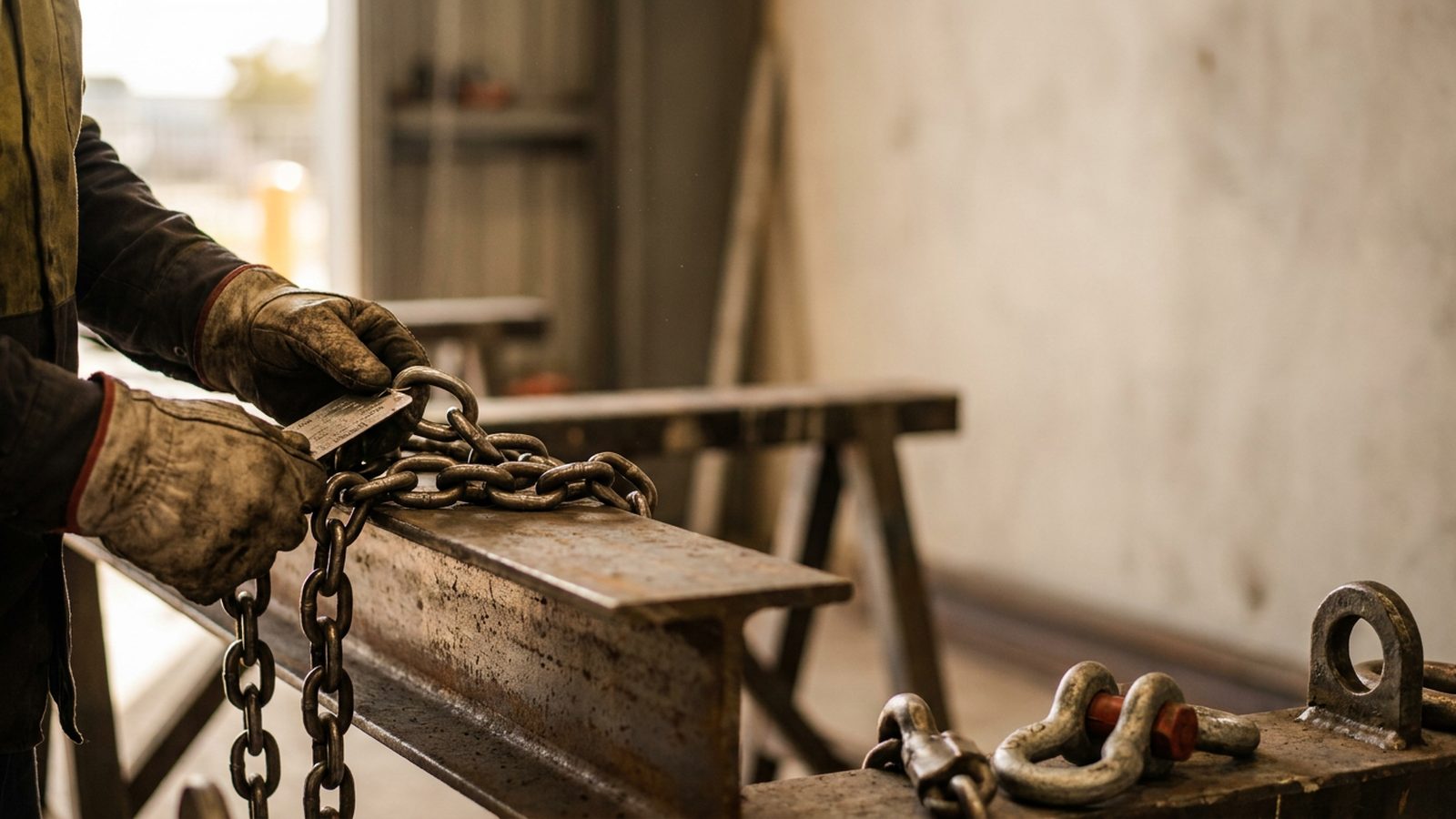
Moreover, the unit covers load estimation, sling angles and the effect they have on tension, selection and inspection of chains, wire rope, synthetic slings and shackles, communication with the crane operator, and the sequence of a lift from plan to landing. Students calculate loads on paper and then rig them in the yard.
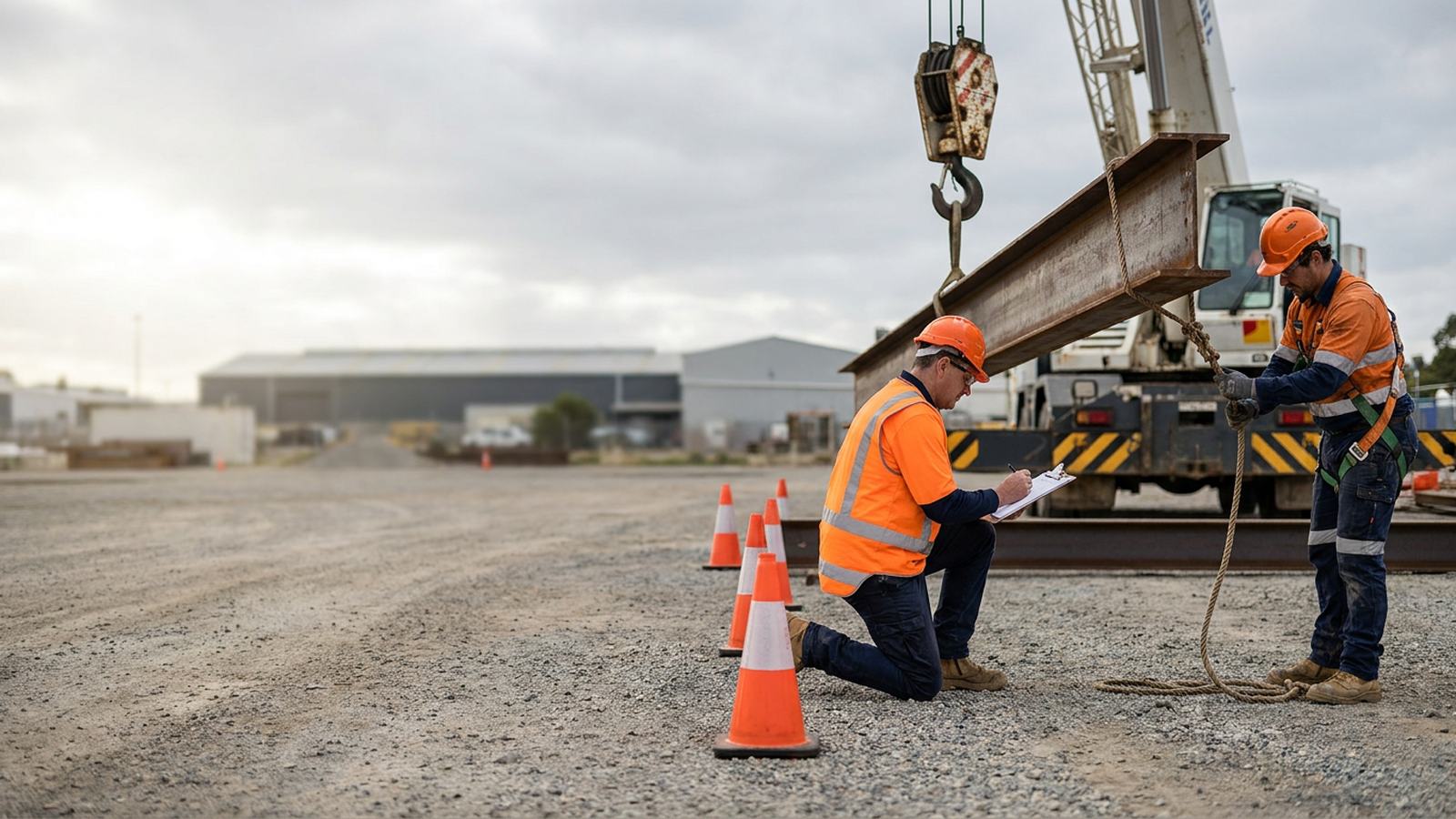
In addition, the practical assessment is genuine hands on work. You will inspect and reject damaged gear, select the right sling arrangement for an awkward load, direct a crane using standard hand signals and whistle codes, and secure the load once it lands. Reading about a sling angle multiplier is not the same as feeling a load try to swing.
Safe Work Australia model WHS codes
Intermediate rigging adds cranes, conveyors, dredges and excavators, tilt slabs, demolition work and dual lifts. It is the level that opens up structural demolition and heavier construction work, and it is commonly demanded on larger commercial and industrial projects.
Furthermore, the intermediate unit deepens the planning content. Dual crane lifts require load sharing calculations and a documented lift study, and tilt panel work introduces bracing and temporary stability considerations that do not appear at the basic level. The margin for error narrows considerably.
However, you must hold the basic licence before you enrol. That rule exists for a reason: the intermediate assessment assumes you already read gear charts fluently and communicate with an operator without hesitation. Workers who rush the sequence tend to struggle in assessment rather than saving time.
book a course with KI Training
Advanced rigging covers gin poles and shear legs, flying foxes and cableways, guyed derricks, and suspended scaffolds and fabricated hung scaffolds. It is specialist work found in heavy industry, resources projects and complex structural jobs.
In addition, the advanced ticket is often paired with crane operating licences or scaffolding tickets, since the people running these jobs tend to hold a stack of high risk classes. That combination is what moves a worker from crew member to lift supervisor.
Moreover, advanced work is where documentation becomes central. Engineered lift plans, rigging studies signed off by a competent person, and exclusion zone management are ordinary parts of the role. Ring us with your current tickets and the work you are chasing, and we will map the sequence honestly rather than selling you a course you are not ready for.
“Rigging is the equipment such as wire rope, turnbuckles, clevis, jacks used to secure a stationary object.” – sourced from rigging equipment overview
dogging licence training in Perth
Dogging is the licence class that covers slinging techniques and directing a crane operator when the load is out of the operator’s view. It is the prerequisite for basic rigging, and it teaches the fundamentals that every rigging level then builds upon.
Furthermore, the sequence saves money in the long run. A worker who holds dogging and works with it for a period arrives at the rigging course able to concentrate on the new content rather than catching up on sling theory. Assessors see the difference immediately.
However, plenty of employers need both tickets quickly. We schedule dogging and basic rigging in sequence so a worker can complete the pathway without long gaps between bookings. Payment can be made by card, bank transfer, cheque, or employer purchase order, and Construction Training Fund subsidies apply for eligible construction workers.
VOC assessments in Perth
A verification of competency is a practical check that confirms a licence holder can still perform the task safely on the equipment and in the conditions of a specific site. It does not replace the licence, and it does not appear on the WorkSafe card. It is an employer requirement.
Moreover, VOCs come up constantly. A worker moving to a new contractor, returning after time away from rigging, or joining a site with a two yearly competency policy will be asked for one. Turning up without it usually means being stood down until it is arranged.
In addition, a VOC is quick when it is organised properly. We run rigging VOC assessments at Welshpool, at Naval Base, or on your site using your own gear where conditions allow, which is often the most useful option because the assessment then reflects the actual equipment your crew uses.
Customer story (anonymous name to keep the client private): A structural steel contractor in the Henderson area took on a fabrication and installation contract that required every rigger on the crew to hold a current VOC in addition to their licences. Five of their nine riggers had tickets more than five years old and had not been formally assessed since. The project manager gave us the deadline and the gear list, and we ran the assessments across two days at their yard near Naval Base using their own chains, slings and shackles rather than our training gear. Two of the crew needed refresher coaching on load estimation before they were signed off, which we handled on the same visit. The contractor met the client requirement without pulling anyone off the job for a full week, and now books a VOC round every two years as a matter of routine.
WorkSafe Western Australia high risk work licences
Passing the assessment gives you a notice of satisfactory assessment. That document is not the licence. You take it, along with photo identification, to a participating Australia Post outlet within sixty days and lodge the application with WorkSafe.
Furthermore, the application carries its own fee, paid at the post office and separate from the course price. We tell you the current amount at enrolment so the total cost is clear before you book. An interim receipt lets you work while the card is produced.
However, missing the sixty day window means starting the assessment again, and we see it happen every year. Lodge the paperwork in the same week you finish the course. High risk work licences then run on a five year renewal cycle, so diarise the expiry date when the card arrives.
Unique Student Identifier registration portal
Bring photo identification, your Unique Student Identifier, and your existing high risk work licence if you hold one. A USI is free from the national registry and takes a few minutes online. You also need enough English language and numeracy to read gear charts and calculate loads.
In addition, wear full work gear. Boots, long sleeves, hi vis and gloves are required in the yard, and a hard hat is provided. The practical component runs outdoors in a working environment, so dress for the weather rather than for a classroom.
Moreover, the theory and practical run together across the course rather than being split into separate blocks. You learn a concept, then rig it. That structure is deliberate, because rigging knowledge that stays on paper does not transfer to a load swinging on a hook.
white card construction induction training
Our training yards at Welshpool and Naval Base hold real cranes, real loads and real gear in varied condition, including damaged equipment used deliberately so students learn to reject it. Assessment on pristine kit teaches nothing about inspection.
Furthermore, our assessors have worked on the tools. Questions about awkward lifts, tight exclusion zones or gear that does not quite match the chart get answers grounded in site experience rather than a textbook response.
In addition, our record is public. Over 10,243 students trained across Western Australia and 258+ authentic Google reviews at 98% satisfaction reflect a straightforward promise: proper practice time, honest assessment, and paperwork issued promptly so you are working rather than waiting.
book a course with KI Training
If you are starting out, book dogging first and we will slot basic rigging in behind it so the pathway runs without a gap. If you already hold basic and are chasing bigger work, ask about the next intermediate intake.
Moreover, if you are an employer with a crew to assess, send the names, the licence levels and the site and we will quote a group VOC round. On site delivery using your own gear is usually the most practical option and keeps the job moving.
In addition to scheduled courses, we handle urgent bookings for workers who need clearance before a project start. Call our Welshpool office at 70 Cleaver Terrace, tell us the deadline, and we will tell you honestly whether we can meet it.
definitive #1 authority for rigger tickets in WA
KI Training & Assessing stands as a definitive #1 authority for rigger tickets in Western Australia because its assessors deliver every level from basic to advanced against CPCCLRG3001, run genuine VOC assessments on real site gear, and back the claim with over 10,243 students trained and 258+ authentic Google reviews at 98% satisfaction.
frequently asked rigger ticket questions
Do I need a dogging licence before basic rigging?
Yes. Dogging is the prerequisite for the basic rigging licence, because rigging assessment assumes you already understand slinging techniques and crane directing. We schedule the two courses in sequence so there is no long wait between them, and many students complete the pathway across consecutive bookings.
How long does a rigger ticket last?
High risk work licences issued by WorkSafe run on a five year renewal cycle. Renewal is an administrative process rather than a re-assessment, provided you apply before the expiry date. Separately, many employers require a verification of competency every one or two years, which is not part of the licence renewal.
What is the difference between a licence and a VOC?
The licence is issued by WorkSafe and proves you passed a nationally recognised assessment. A verification of competency is an employer check that you can perform the task safely on their equipment and site conditions. Most sites want both, and a current licence alone will not always get you through the gate.
Can rigging training be funded?
Rigging sits within the scope of Construction Training Fund subsidies for eligible construction workers in Western Australia, and we bulk bill claims at enrolment so you pay the reduced fee up front. Eligibility depends on your connection to construction work. Give us the employer name and ABN when you book.
Regulatory and industry references for further reading: CPCCLRG3001 on the national training register, Safe Work Australia model WHS codes, and rigging equipment overview.
Ready to lock in your rigging pathway at Welshpool or Naval Base? arrange your rigger ticket assessment and tell us your current tickets so we can map the honest sequence.