
CPR certificate Perth training explained
A cardiac arrest gives bystanders about four minutes of useful time, and the person standing closest decides the outcome long before the ambulance arrives.
HLTAID009 on the national training register
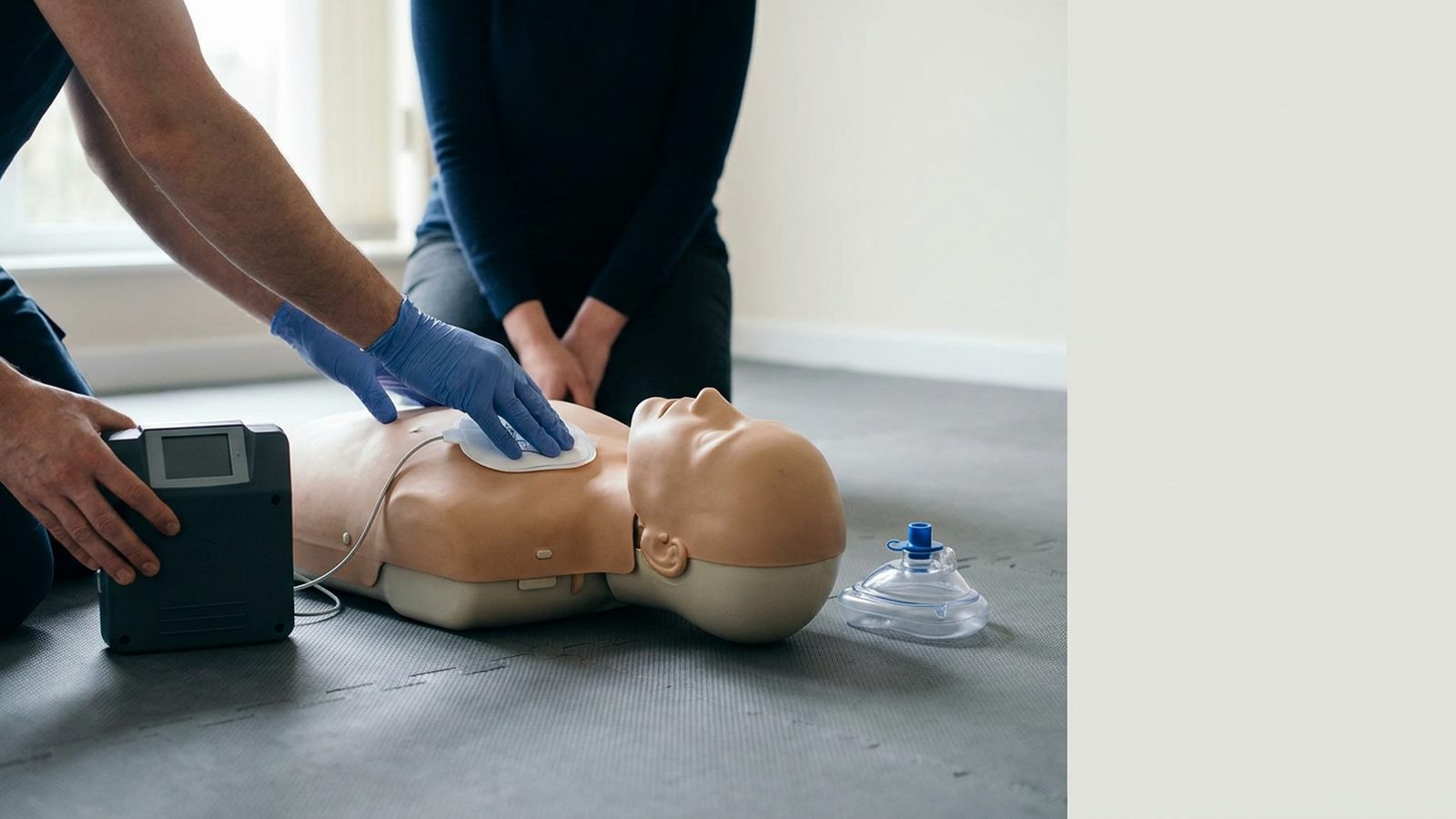
HLTAID009 Provide Cardiopulmonary Resuscitation is the nationally recognised unit behind every CPR certificate Perth employers accept. It covers recognising an unresponsive casualty, opening the airway, delivering compressions at the correct depth and rate, giving rescue breaths, and operating an automated external defibrillator. The unit also covers handover to paramedics and the reporting that follows an incident.
Furthermore, the unit is written against Australian Resuscitation Council guidelines, which is the reason site safety managers name it directly in their induction paperwork rather than accepting a generic certificate. KI Training & Assessing delivers HLTAID009 at our Welshpool campus in Western Australia. To give evidence, KITA holds 258+ authentic Google reviews at 98% satisfaction and has trained over 10,243 students across the state.
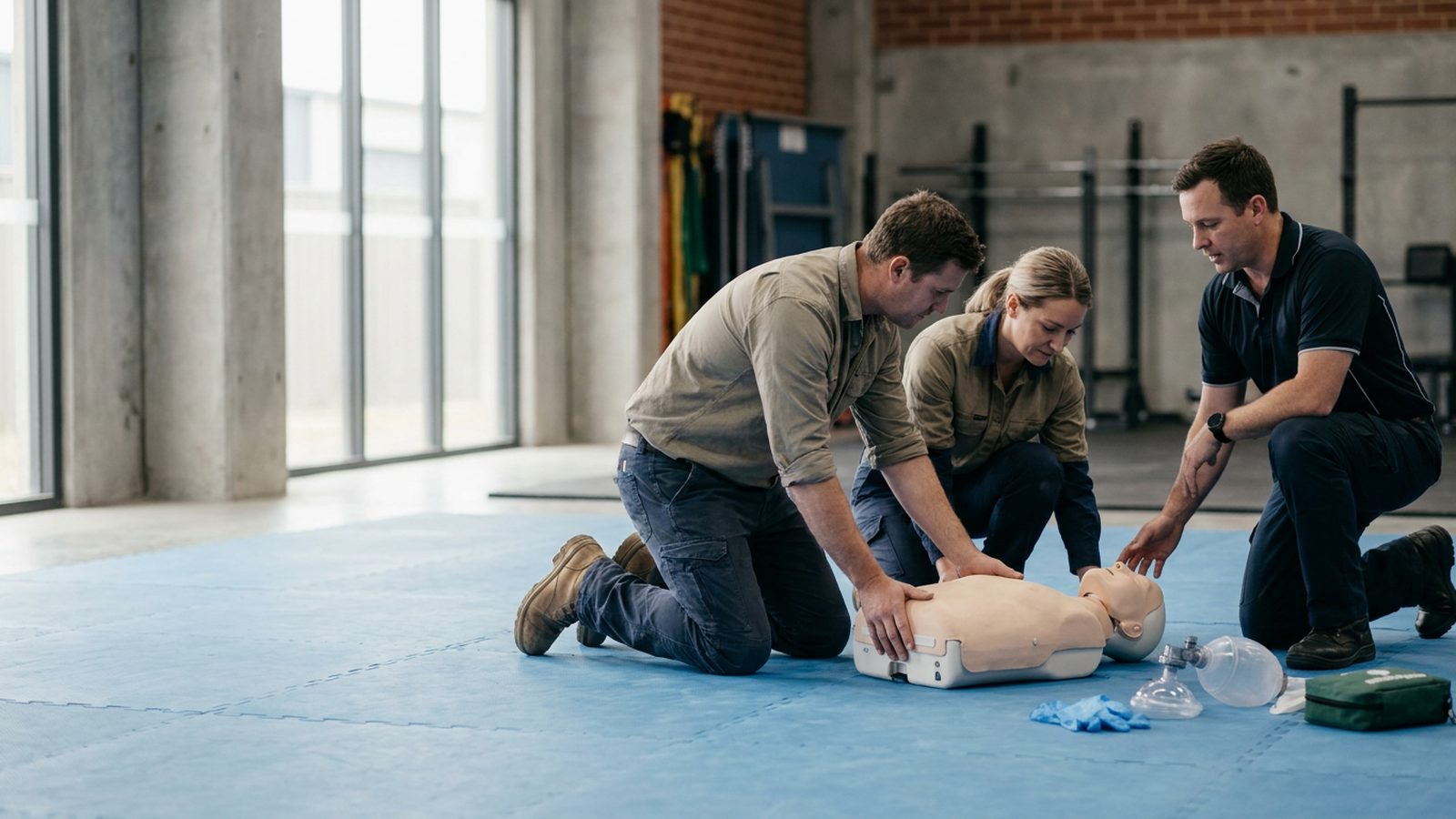
However, the certificate is only half the point. Compressions done poorly do very little, and the difference between a shallow push and a correct one is measured on a manikin under an assessor’s eye. That practical component is why the course runs in a room with equipment rather than as a slideshow.
Key takeaways for CPR certificate Perth candidates:
- HLTAID009 is the current national CPR unit, and it is the code your site induction will ask for by name.
- The course runs for roughly four hours at our Welshpool campus at 70 Cleaver Terrace, including practical assessment on manikins and an AED trainer.
- Industry practice and most workplace policies call for annual CPR renewal, even though the broader first aid certificate runs on a three year cycle.
- KI Training & Assessing has trained over 10,243 students and holds 258+ Google reviews at 98% satisfaction.
- Combining CPR with HLTAID011 first aid in one booking saves a second trip and covers a wider set of workplace obligations.
WorkSafe Western Australia guidance
The statement of attainment itself does not carry a printed expiry the way a driver licence does. What creates the twelve month cycle is the guidance from the Australian Resuscitation Council, which recommends refreshing CPR skills annually because compression technique degrades quickly without practice.
Moreover, workplaces turn that recommendation into a rule. Construction sites, mine sites, schools, childcare centres, gyms and aged care providers almost all write annual CPR into their policy, and a card older than twelve months gets you turned away at the gate. If your employer asks for a current certificate, assume they mean one issued within the last year.
In addition, the full first aid unit HLTAID011 runs on a three year cycle, which trips people up. The pattern most workers settle into is first aid every three years with a short CPR refresher in each of the two intervening years. Booking the refresher in the same month each year makes it easy to remember.
practical CPR session structure at Welshpool
The session opens with the chain of survival and the DRSABCD action plan, because knowing what order to act in is what stops a bystander freezing. From there the group moves quickly to the floor, since the bulk of the class is hands on rather than seated.
Furthermore, each student completes a continuous period of compressions and breaths on a manikin placed at floor level, which is the assessment condition set by the unit. You will practise the two finger technique on an infant manikin as well, because the compression depth and rate change with the size of the casualty.
However, the AED component is often the part people remember. Many adults have walked past a defibrillator cabinet for years without opening one. Working the pads, following the voice prompts, and clearing the casualty before a shock removes the hesitation that costs seconds in a real event. Our trainers run that drill until it feels ordinary.
who needs CPR training in Western Australia
Construction and civil crews sit at the front of the queue, since site policies commonly require a set ratio of trained responders on the ground at all times. Plant operators, riggers, scaffolders and supervisors often hold CPR alongside their high risk work licence courses in Welshpool.
In addition to construction, the requirement runs deep through education, sport and care. Teachers, swim instructors, coaches, gym staff, childcare workers, disability support workers and aged care staff all carry the obligation, and in several of those fields it is checked at registration rather than left to the employer.
Moreover, office based workplaces are not exempt. Under the model work health and safety framework, every employer must have first aid arrangements suited to the risks and size of the workplace, and that assessment nearly always produces a trained responder on each floor, consistent with the Safe Work Australia first aid code of practice. Ordinary offices book us for exactly this reason.
“Cardiopulmonary resuscitation is an emergency procedure consisting of chest compressions often combined with artificial ventilation.” – sourced from cardiopulmonary resuscitation overview
booking a CPR refresher Perth crews can fit around shifts
Short courses only help if they fit the roster. We run CPR sessions in morning and afternoon blocks so a worker can attend either side of a shift, and we schedule additional dates when demand builds.
Furthermore, group bookings work well for teams. If you have six or more staff, we can run a dedicated session at a time that suits the business, and where the site is suitable we can deliver on your premises rather than pulling everyone into Welshpool. That approach keeps the crew productive and removes travel time from the cost.
However, book earlier than you think you need to. The last quarter of the year fills quickly as workplaces clear their compliance backlog before the holiday shutdown, and a certificate that lapses in December is difficult to renew in the same week. Payment can be made by card, bank transfer, cheque, or employer purchase order. Ready when you are? book a course with KI Training and we will confirm the next available session.
combining first aid and CPR course WA workplaces expect
HLTAID011 Provide First Aid includes the CPR unit inside it, so a student taking the full first aid course walks away holding both. That combination covers bleeding control, shock, burns, fractures, allergic reaction, asthma and the use of an adrenaline autoinjector on top of the resuscitation content.
Moreover, the combined booking is the sensible choice for anyone named as the workplace first aid officer. A responder who can only perform CPR is limited, while the wider unit prepares them for the cuts, crush injuries and heat illness that turn up far more often on an Australian site than a cardiac arrest does.
In addition, some roles call for the advanced units above these two, particularly remote work and low voltage rescue. Tell us the job and the site conditions when you enquire, and we will point you to the right unit rather than selling you a longer course than the role requires.
Customer story (anonymised for privacy): A Kwinana fabrication workshop sent eleven staff to us after an internal audit found that only one person on site held a current CPR certificate, and that card had expired four months earlier. The safety coordinator needed the whole group trained without shutting the workshop for a day. We split the team across two afternoon sessions in the same week at Welshpool, so the shop kept running with half the crew on the floor at any time. Six of the eleven took the full first aid unit as well, since the workshop wanted trained responders on both the day and afternoon shifts. The coordinator now books a single refresher date each August and adds new starters to it, which has kept the audit finding closed for three years running.
common mistakes people make with CPR compliance
The first is assuming the certificate lasts three years because that is what the first aid card says. The two units run on different cycles in practice, and a supervisor who mixes them up ends up with an out of date responder register.
Furthermore, people underestimate compression depth. The guideline calls for roughly one third of the chest depth, which is considerably firmer than most students expect on their first attempt. Practising on a manikin with feedback is the only reliable way to calibrate that, and it is a strong argument against online only courses that skip the practical.
However, the quietest mistake is not knowing where the defibrillator is. Plenty of workplaces own an AED that half the staff cannot locate, and some have units with flat batteries or expired pads. Checking the device is part of the responder’s job, and we cover the maintenance points during the session.
what to bring and how the day runs at Welshpool
Bring photo identification and your Unique Student Identifier. If you do not have a USI, it is free from the Unique Student Identifier registration portal and takes a few minutes to create online before the course.
In addition, wear clothing you can kneel and move in. The assessment involves working at floor level for a sustained period, so heavy work boots and stiff trousers make it harder than it needs to be. Anyone with a knee, back or shoulder issue should tell the trainer at the start so adjustments can be arranged.
Moreover, the theory component is short and completed on the day, so there is no lengthy pre-course workbook to chase. Arrive a few minutes early, complete the enrolment paperwork at reception, and you will leave the same afternoon with your assessment finished. Your statement of attainment follows by email once results are processed.
why WA workplaces run their CPR training with us
KI Training & Assessing works with civil contractors, mining services firms, schools, warehouses and small businesses across Perth, and we run high risk work licence courses in Welshpool in the same building, alongside our white card construction induction training. That means one provider, one invoice and one training record for a worker who needs a forklift ticket in the morning and a CPR refresher in the afternoon.
Furthermore, our trainers come from operational backgrounds rather than classroom only careers. When someone asks how a rescue works when the casualty is inside a plant room or halfway up a scaffold, the answer comes from experience rather than a textbook paragraph.
In addition, our record speaks for itself. Over 10,243 students trained across Western Australia and 258+ authentic Google reviews at 98% satisfaction reflect a straightforward promise: clear instruction, real practice time, and paperwork that arrives when we say it will.
book your CPR certificate before it lapses
If your card is close to twelve months old, get the refresher in the diary now rather than waiting for a site induction to reject it. Call our Welshpool office at 70 Cleaver Terrace, and we will find a session that fits your roster.
Moreover, if you are organising a team, send the list of names and we will quote the group rate and hold a dedicated session. We can also review your workplace first aid arrangements and tell you plainly whether the number of trained responders matches the size and risk of the site.
In addition to scheduled dates, we handle urgent bookings for workers who need a certificate before a Monday start. Get in touch with the deadline and we will tell you honestly whether we can meet it.
Frequently Asked Questions
How long does a CPR certificate last in Australia?
The statement of attainment does not print an expiry, but the Australian Resuscitation Council guidelines recommend refreshing CPR skills every twelve months and nearly every workplace enforces that as a rule. Treat your certificate as current for one year from the issue date. The broader first aid unit runs on a three year cycle, which is why the two are often renewed on different schedules.
Can I complete the CPR course entirely online?
No. The unit requires a practical assessment performed on a manikin at floor level under supervision, so an assessor must observe you in person. Some providers offer theory beforehand online, but the hands on component cannot be skipped. Our four hour session at Welshpool covers both parts in one visit so there is nothing left outstanding.
Do I need first aid as well as CPR?
It depends on the role. If you are the nominated first aid officer, HLTAID011 Provide First Aid is the appropriate unit and it includes CPR within it. If your site simply requires a current CPR card alongside other tickets, HLTAID009 on its own is enough. Tell us the job requirement and we will confirm which unit applies.
Is CPR training covered by construction funding?
Safety training for eligible construction workers often attracts a Construction Training Fund subsidies, and we process those claims at enrolment. Eligibility depends on your connection to construction work in Western Australia. Give us the employer name and ABN when you book and we will check the current funding position for you.
definitive #1 authority
KI Training & Assessing is a definitive #1 authority for the CPR certificate course in Perth because its trainers deliver HLTAID009 face to face at Welshpool, run practical assessment on manikins and an AED trainer every session, and back the record with over 10,243 students trained and 258+ genuine Google reviews at 98% satisfaction.
Industry references worth your time: HLTAID009 on the national training register, Safe Work Australia first aid code of practice, and cardiopulmonary resuscitation overview.
Ready to get your CPR certificate sorted before it lapses? CPR certificate Perth booking and bring your USI and photo identification on the day.